

Table of Contents
To start a garden, you pick a sunny spot, choose a few easy crops, prepare the soil, plant them, and keep a simple watering routine going through the season. Most people stall on the decisions, so the plan below turns starting a garden into a short checklist you can work through in a couple of weekends. You do not need a big yard or any experience to grow your first vegetables or flowers. Growing even a small plot has measurable benefits for your mood, stress, and general health, which is why it is worth setting up well from the first season. This plan gives you a spot to plant, a handful of easy crops, and a weekly tending routine, so a bare patch of ground becomes a garden you actually keep alive.
Key takeaways
A first garden works best when you start small and pick crops that suit your light.
Give each part its own step: pick a spot, choose crops, prepare the soil, plant, water.
The weekly watering and weeding routine is what carries the garden to harvest.
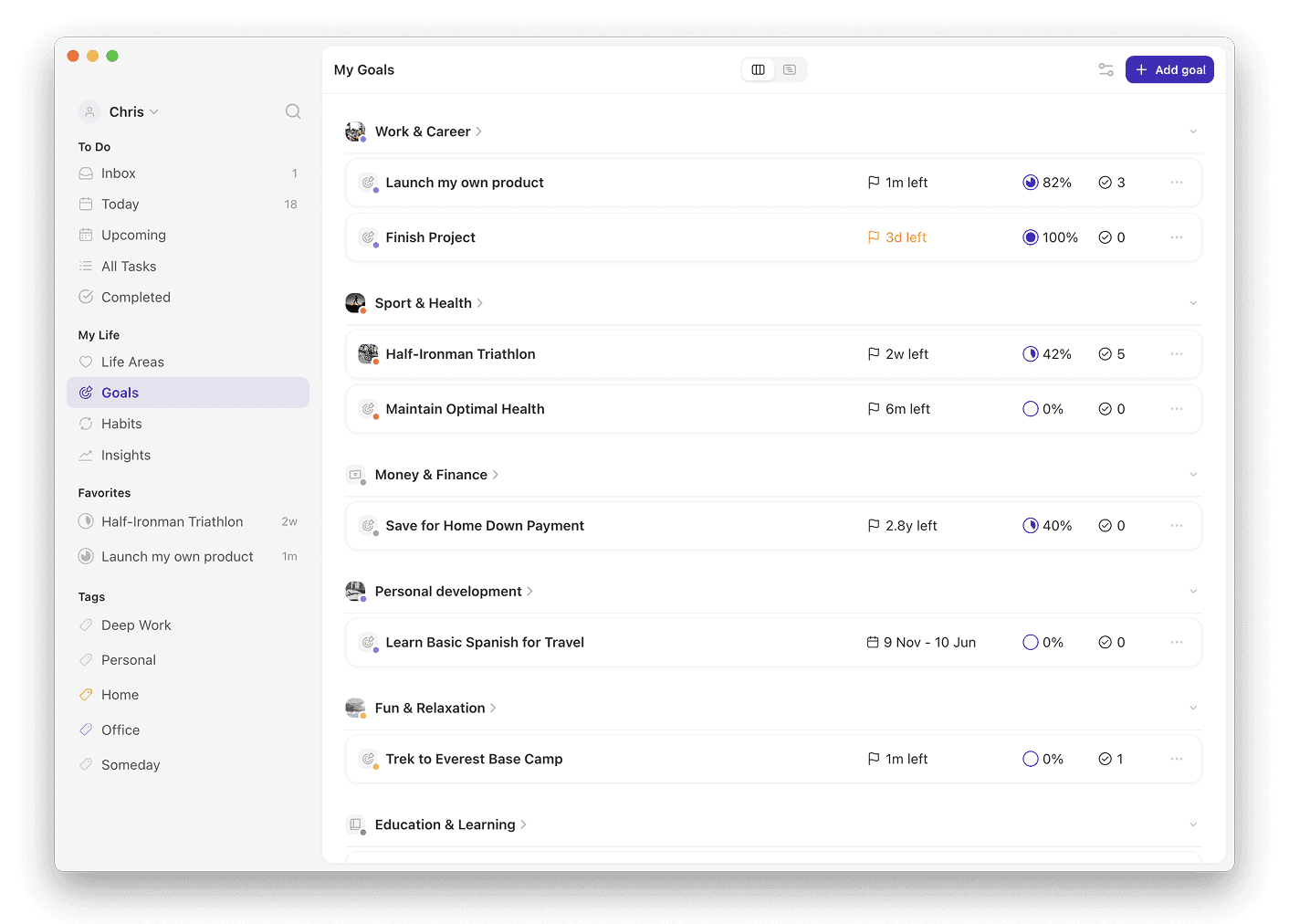
In Griply the garden is one goal with plan, plant, and tend as subgoals, each holding its tasks, plus a tending habit.
The plan, step by step
Here is the whole plan before you dig anything. Work down the list, and each step has a target to hit before the next, so you always know what to do this weekend.
Stage | Target to hit before moving on | Rough time |
|---|---|---|
1. Pick your spot | Find a patch with 6+ hours of sun and water nearby | 1 day |
2. Choose what to grow | Pick 3 to 5 easy crops that suit your light | 1 day |
3. Beds or pots | Decide on in-ground, a raised bed, or containers | 1 day |
4. Prepare the soil | Loosen the ground and mix in 2 to 3 inches of compost | 1-2 weekends |
5. Plant | Get seeds or seedlings in at the right spacing | 1 day |
6. Water and tend | A watering routine you can keep every week | ongoing |
7. Harvest | Pick your first crop | weeks to months |
Most first gardens are planted within two or three weekends, and the harvest follows anywhere from a few weeks for salad leaves to a few months for tomatoes. The early steps overlap, so you can choose your crops while the compost settles into the bed.
How to do each step
The setup steps get the garden into the ground, and none of them need special skill. Here is how to do each one so you know exactly what to do this weekend.
Pick a sunny spot
Watch your yard or balcony for a day and find the patch that gets at least six hours of direct sun, since most vegetables need it to produce well. Check that a hose or watering can reaches it, and that the ground drains well after rain. Leafy crops like lettuce and kale tolerate a little more shade if full sun is scarce.
Choose easy starter crops
Pick three to five crops that grow easily and that you actually want to eat or look at. Good beginner vegetables are lettuce, bush beans, cucumbers, tomatoes, peppers, and leafy greens like chard and kale. If you want flowers, sunflowers, marigolds, and zinnias are hard to get wrong. Match the crop to your light before you buy.
In the ground, a raised bed, or pots
Decide how you will hold the soil. In-ground beds are cheapest and suit decent existing soil. A raised bed gives you clean soil and easier reach if your ground is poor or rocky. Containers work on a balcony or patio and are the lowest-commitment way to start, so pick whichever fits your space.
Prepare the soil
Loosen the top 20 to 30 centimetres of soil so roots can spread, then work a two to three inch layer of compost into it to feed the plants and improve drainage. For pots, fill them with a bag of quality potting mix. A cheap soil test tells you your pH if you want to be precise, but compost and a sunny spot cover most first gardens.
Plant your seeds or seedlings
For the fastest win, buy young seedlings from a garden centre; they are already weeks ahead and easier for a first season. Plant them at the spacing on the label, since crowded plants compete and stay small. Sow quick crops like lettuce and beans straight into the soil. Plant at the right time for your area, so check your local frost and planting dates first.
Water it in and tend it
Water everything well the day you plant, then settle into the routine below. Turning each step into something you can check off tells you exactly where you are, from a prepared bed to the first seedlings in the ground, so the garden never feels like one vague chore.
Why it feels hard
A garden is a slow project. You prepare the ground, plant, and then wait weeks before anything shows, so it is easy to lose interest or start so big that the weeding buries you. A starter plot of around 50 to 75 square feet is plenty for a first garden, and a few pots is plenty too.
The harvest is the outcome you want, and working back from it to this week's tasks is what keeps you going before the first crop arrives. You cannot control the weather or how fast a seed sprouts. You can control whether you prepare the bed, plant on time, and water on a schedule.
Build the habit
A garden runs on a tending routine. Two or three times a week you water, pull any weeds while they are small, and check the leaves for pests, and that rhythm carries the garden from planting to harvest. Water deeply when you do: a long soak once or twice a week grows deeper roots than a light daily sprinkle, so give most gardens a deep soak that adds up to about an inch of water a week. Building the tending into a steady habit, like a Saturday-morning walk round the beds with your coffee, keeps the garden going on the weeks you would rather stay inside. Gardening is a fine way to take up a new hobby, and the same weekly rhythm keeps any of them alive.
Common mistakes
A few habits catch most first-time gardeners:
Starting too big, which turns a new garden into hours of weeding. Start with one small bed or a few pots.
Planting sun-lovers in a shady corner. Watch your light for a day and match the crop to the spot.
Watering a little every day, which keeps roots shallow. Give the bed a deep soak once or twice a week.
Skipping the compost and planting into poor soil. Mix organic matter in before you plant.
Planting at the wrong time of year. Check your local frost and planting dates before you buy seedlings.
Set it up in Griply
The hard part is rarely the digging. It is holding all the setup steps in one place and keeping the watering going once the first excitement wears off. In Griply the whole project becomes one scannable template under your Fun & Relaxation life area:
Goal: Start a garden (metric: Subgoals, average)
Subgoal: Plan
Task: pick a spot that gets 6+ hours of sun
Task: choose 3 to 5 easy starter crops
Subgoal: Plant
Task: prepare the bed or fill pots with compost
Task: plant your seeds or seedlings at the right spacing
Task: water everything in and set your watering days
Subgoal: Tend
Task: do your first full weekly tending round
Task: do your first weed and thin pass once seedlings are up
Habit: Water and check the garden (schedule: 2 to 3 times a week)
Each phase progresses as you tick its tasks, and the goal averages the three, so you see Plan, Plant, and Tend fill up as the garden goes in, and the tending habit carries the watering. The Goal Planner keeps the goal, its three phases, and the tending habit in one view, so the plan you just read becomes a template you can reuse next season. Subgoals, habit targets, and progress charts are part of Griply's paid plan; the free plan covers two goals and two habits.
Frequently asked questions
How do I start a garden as a beginner?
Pick a spot with at least six hours of sun and water nearby, choose three to five easy crops, mix compost into the soil or fill a few pots, and plant. Then water deeply two or three times a week. Starting small is what keeps it manageable.
What is the easiest thing to grow for a first garden?
Lettuce, bush beans, radishes, cucumbers, and leafy greens like kale and chard are among the easiest vegetables. For flowers, sunflowers, marigolds, and zinnias are hard to get wrong. Young seedlings from a garden centre make the first season easier still, since they are already weeks ahead.
When should I start a garden?
Most gardens go in during spring, after the last frost in your area, since young plants are sensitive to cold. Check your local frost and planting dates, which your regional extension service publishes. Cool crops like lettuce and peas can go in earlier than warm ones like tomatoes.
Do I need a big yard to start a garden?
No. A few containers on a balcony or patio are enough to grow salad leaves, herbs, and even tomatoes. A starter bed of around 50 to 75 square feet is plenty of ground. Start small, and expand once you have a season behind you.
How often should I water a new garden?
Water deeply two or three times a week, aiming for about an inch of water in total. Deep, less frequent watering grows stronger roots than a daily sprinkle. Check the soil with your finger first, and water more in hot, dry weather.
Start small this season
Starting a garden comes down to a spot, a few easy crops, and a watering routine you can keep. You pick the sunniest patch you have, prepare the soil, plant what you want to eat, and water it deeply through the week.
A first garden does not need to be big to work. One small bed or a cluster of pots gives you a real harvest and teaches you your light, your soil, and your season, which is what makes next year's garden easier. Keep the plot small enough that the weekly tending stays a pleasure, get your plants in at the right time, and let the routine carry them to harvest. A garden earns its place among the rest of your fun and relaxation goals. The first tomato you pick off your own plant is worth every weekend it took to get there.
Related Goal Plans


Related Guides
Soga M, Gaston KJ, Yamaura Y. "Gardening is beneficial for health: A meta-analysis." Preventive Medicine Reports, 2017. https://pmc.ncbi.nlm.nih.gov/articles/PMC5153451/
University of Maryland Extension. "How to Start a Vegetable Garden." University of Maryland Extension, 2023. https://extension.umd.edu/resource/how-start-vegetable-garden
Alfuth D. "Beginning Vegetable Garden Basics: Site Selection and Soil Preparation." Wisconsin Horticulture, University of Wisconsin-Madison Extension, 2022. https://hort.extension.wisc.edu/articles/beginning-vegetable-garden-basics-site-selection-and-soil-preparation/
Westfall AT. "How to Water a Garden." Purdue Extension, 2020. https://www.extension.purdue.edu/news/county/white/2020/07/How-to-Water-a-Garden.html