

Table of Contents
Starting to invest means putting money into assets such as low-cost index funds on a regular schedule so it can grow over time, once you have a cash cushion for emergencies. If you have been meaning to start but keep waiting for a better moment or a bigger balance, the hold-up is rarely the market. For most beginners the steps are the same: set a target, cover your safety net, open an account, pick one diversified fund, and automate a monthly contribution. Giving the goal a specific number and date makes it far easier to act on than a vague plan to invest someday. The rest is repetition. This plan walks through each step and turns it into something you set up once and repeat every month.
This is general educational information and not financial advice.
Key takeaways
The fastest way to start is to automate a fixed monthly amount into one low-cost diversified fund.
Build a small emergency fund first, so you never have to sell investments at a bad time.
Time in the market matters more than timing it, because regular contributions compound over years.
In Griply you set investing as one goal with a currency target, run it on a monthly contribution habit, and tick off each setup step as a task.
The plan, step by step
Here is the whole plan before you start. Do the steps in order, since each one makes the next easier.
Step | Target to hit before moving on | Rough time |
|---|---|---|
1. Set your target | An amount and a date written down | Day 1 |
2. Fund your safety net | A starter cash cushion for emergencies | a few weeks to months |
3. Open an account | A brokerage or retirement account opened | 1 day |
4. Pick one fund | A single low-cost diversified index fund chosen | 1-2 days |
5. Automate it | A fixed monthly transfer switched on | 1 day |
6. Keep investing | 12 monthly contributions made | ongoing |
Most of the setup takes a weekend. Step 2 can run longer, and steps 3 to 5 often happen in one sitting once your safety net is in place. After that, the plan runs on repeat.
Why it feels hard
Investing feels intimidating because the outcome you want, a larger balance years from now, is out of your hands day to day. Markets rise and fall on their own schedule. What you control is how much you put in and how often. Returns build on both your contributions and their past growth, so the money you invest early has the most time to compound, which is why starting small today beats waiting for a perfect moment.
The balance is the outcome, and the monthly contribution is the process. Pinning the goal to a clear, specific target lets you judge each month by whether the contribution went in. You cannot control what the market does this year. You can control whether you make this month's contribution.
How to start
Here is how to work through each step. Take them in order, since each one clears the way for the next.
1. Set your target
Pick an amount and a date, like investing a set sum each month for the next year, or reaching a round balance by a chosen age. A specific number gives you something to track and makes the monthly contribution feel concrete. Keep it realistic for your budget, and raise it later when you can.
2. Build your emergency fund first
An emergency fund is cash set aside for unexpected costs, usually a few months of essential expenses, kept in a savings account you can reach quickly. Build a starter version before you invest a cent. Many people would struggle to cover a surprise $400 expense from cash, and without that buffer you may have to sell investments at a loss the moment life happens. Start with one month of expenses, then build toward three to six over time.
3. Open an account
Open a brokerage account or a tax-advantaged retirement account, depending on your goal and where you live. The process is online and usually takes under an hour. You link a bank account so you can move money in. If your employer offers a retirement plan that matches your contributions, that is often the simplest place to begin.
4. Pick one low-cost diversified fund
An index fund holds a broad slice of the market at once, often hundreds or thousands of companies, so you spread your money across all of them and lower the risk that any single stock carries. A broad, low-cost index fund is a common starting point, because after fees the average passively managed dollar tends to beat the average actively managed one. Check the expense ratio, the yearly fee shown as a percentage, and favour low numbers. Small fees compound against you the same way returns compound for you.
5. Automate your monthly contribution
Set up an automatic transfer that moves a fixed amount into your fund on the same day each month. This is dollar-cost averaging: investing a set amount on a schedule regardless of price, so you buy more units when prices are low and fewer when they are high, and you never have to guess the right moment. Automating it also removes the monthly decision, which is what quietly ends most plans.
Build the habit
The contribution is the engine of the whole plan, so the goal is to make it automatic and repeatable. People save far more when the increase is set up in advance and happens on its own, which is exactly what an automatic monthly transfer does for you. Once it runs on its own, your job each month is to confirm it happened and, when you get a raise, nudge the amount up.
A repeatable cue, routine, and reward loop keeps the contribution happening even on months you would rather not check your balance. Tie the check to something you already do, like reviewing your budget on payday, so investing becomes a normal part of the month.
Common mistakes
A few habits trip up new investors:
Trying to time the market by waiting for a dip. The best time to start is usually now, since early money compounds longest.
Picking funds with high fees. A 1% yearly fee sounds small but compounds against your returns for decades.
Investing before you have any emergency fund. One surprise bill can force you to sell at the worst time.
Checking your balance daily and selling in a panic on a red day. Set the plan and look in monthly at most.
Waiting until you can invest a large amount. A small automatic contribution started today beats a big one you keep postponing.
Set it up in Griply
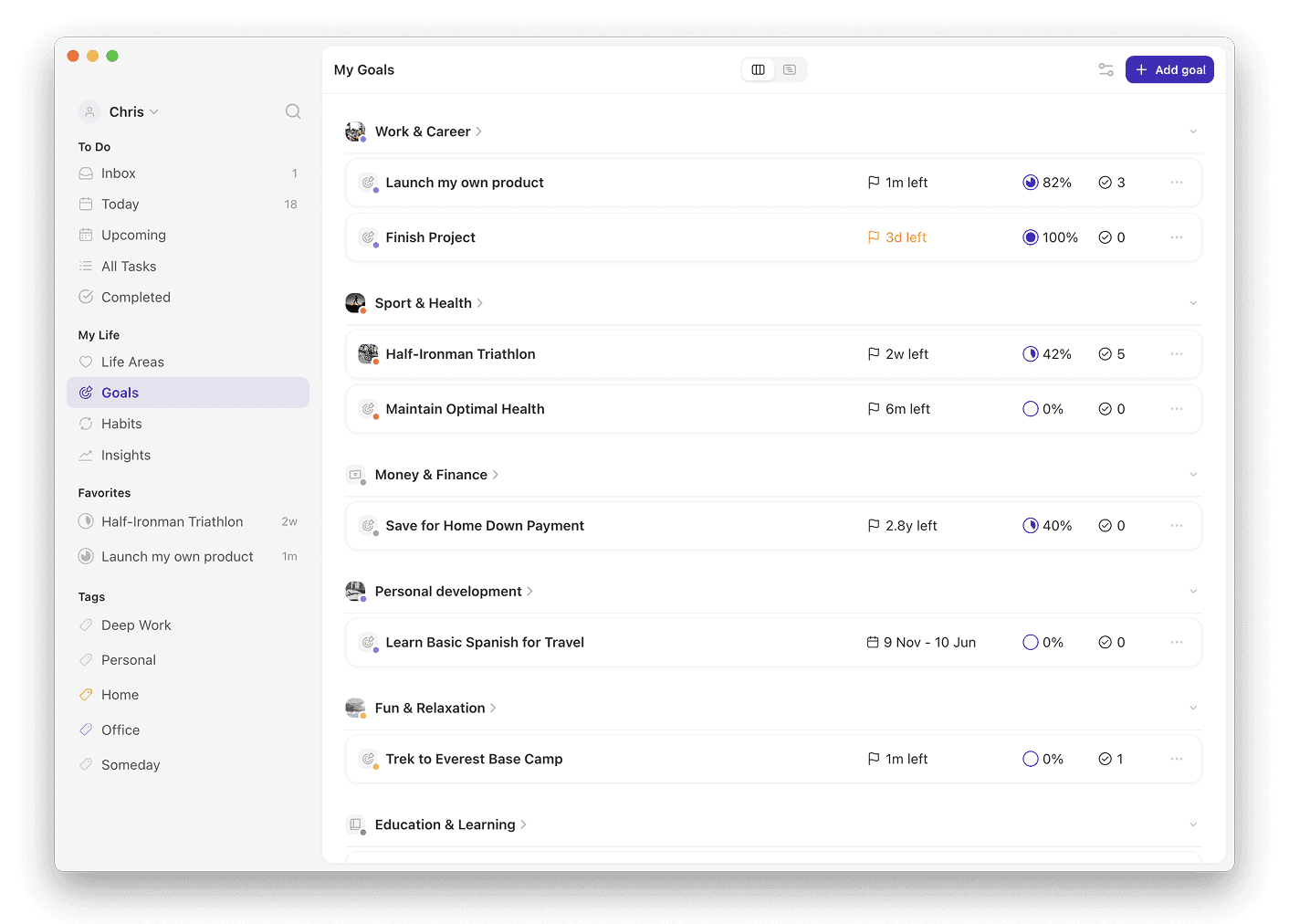
The hard part is rarely deciding to invest. It is keeping the plan in one place and seeing whether the balance is actually moving. In Griply it becomes one scannable template under your Money & Finance life area:
Goal: Start investing (metric: Unit-based, currency, $0 to your target)
Task: set your target amount and date
Task: build a starter emergency fund first
Task: open a brokerage or retirement account
Task: pick one low-cost index fund
Task: switch on an automatic monthly transfer
Habit: Invest a fixed amount (schedule: every month)
You log each contribution as it lands, so the progress line climbs from zero toward your target and turns green when you reach it. The Habit Tracker keeps the goal, the monthly contribution, and your setup steps in one view, so the plan you just read becomes a template you can reuse for the next money goal. Habit targets and progress charts are part of Griply's paid plan; the free plan covers two goals and two habits.
Frequently asked questions
How should you start investing as a beginner?
Start by setting a target, then build a small emergency fund. Open a brokerage or retirement account, choose one low-cost diversified index fund, and automate a fixed monthly contribution. Keeping it automatic and consistent matters more than the amount you begin with.
Is $100 enough to start investing?
Yes. Many brokers let you start with $100 or less, and some funds have no minimum. A small, regular contribution invested consistently grows through compounding over time, so starting now with a little beats waiting until you can invest a large amount.
How much money do you need to start investing?
There is no set minimum for most beginners. You can often begin with a small monthly amount your budget can spare after covering expenses and a starter emergency fund. The habit of contributing regularly matters more than the size of your first deposit.
How long does it take to see returns?
Investing is a long-term plan, and returns show up over years. Any promise to turn a small sum into a large one in a month is a warning sign to walk away from. Compounding rewards patience and steady, regular contributions.
Start small, start now
The whole plan comes down to a few steps you do once and one you repeat. Set a target, cover your safety net, open an account, pick a low-cost fund, and automate a monthly amount. After that, the balance grows on its own schedule while you get on with your life. It slots in alongside your other money and finance plans once your safety net is set.
The most common regret among investors is waiting too long to begin, because the money you invest earliest has the most years to compound. You do not need a large sum or a perfect market. You need a fixed amount, an automatic transfer, and the patience to leave it alone. Once the first contribution lands and you watch the line tick up, the habit gets easier every month.
Related Goal Plans


Related Guides
Sharpe, William F. "The Arithmetic of Active Management." Financial Analysts Journal, 1991. https://web.stanford.edu/~wfsharpe/art/active/active.htm
Thaler, Richard H., Benartzi, Shlomo. "Save More Tomorrow: Using Behavioral Economics to Increase Employee Saving." Journal of Political Economy, 2004. https://www.anderson.ucla.edu/documents/areas/fac/accounting/save_more_tomorrow.pdf
U.S. Securities and Exchange Commission. "Compound Interest." Investor.gov. https://www.investor.gov/introduction-investing/investing-basics/glossary/compound-interest
Board of Governors of the Federal Reserve System. "Report on the Economic Well-Being of U.S. Households in 2024: Savings and Investments." 2025. https://www.federalreserve.gov/publications/2025-economic-well-being-of-us-households-in-2024-savings-and-investments.htm