What is a personal strategic plan?
A personal strategic plan is a structured system with four layers: life areas (scope), a vision per area (direction), goals with deadlines (commitment), and subgoals that map the path to each outcome. Griply implements this exact structure in one tool, updated daily.
The four layers every personal strategic plan needs
Most definitions of a personal strategic plan borrow from corporate strategy. The SMART goal framework, SWOT analysis, the Wheel of Life, and Clayton Christensen's "How Will You Measure Your Life?" are all reference points. What these frameworks share is the same four-layer logic: scope (what areas of life matter), direction (what you want each area to become), commitment (a measurable target with a date), and path (the intermediate steps between here and there).
The four layers only work together. A vision without a measurable goal is aspiration. A goal without a parent life area has no context for why it matters. Subgoals without a goal to report to become a second to-do list. The layer most personal planning approaches skip is visibility: the plan lives in a document reviewed once a year, disconnected from the tool you open every morning.
A personal strategic plan that works is one where all four layers live in the same place and are visible before you decide what to do each day.
How Griply implements the personal strategic plan
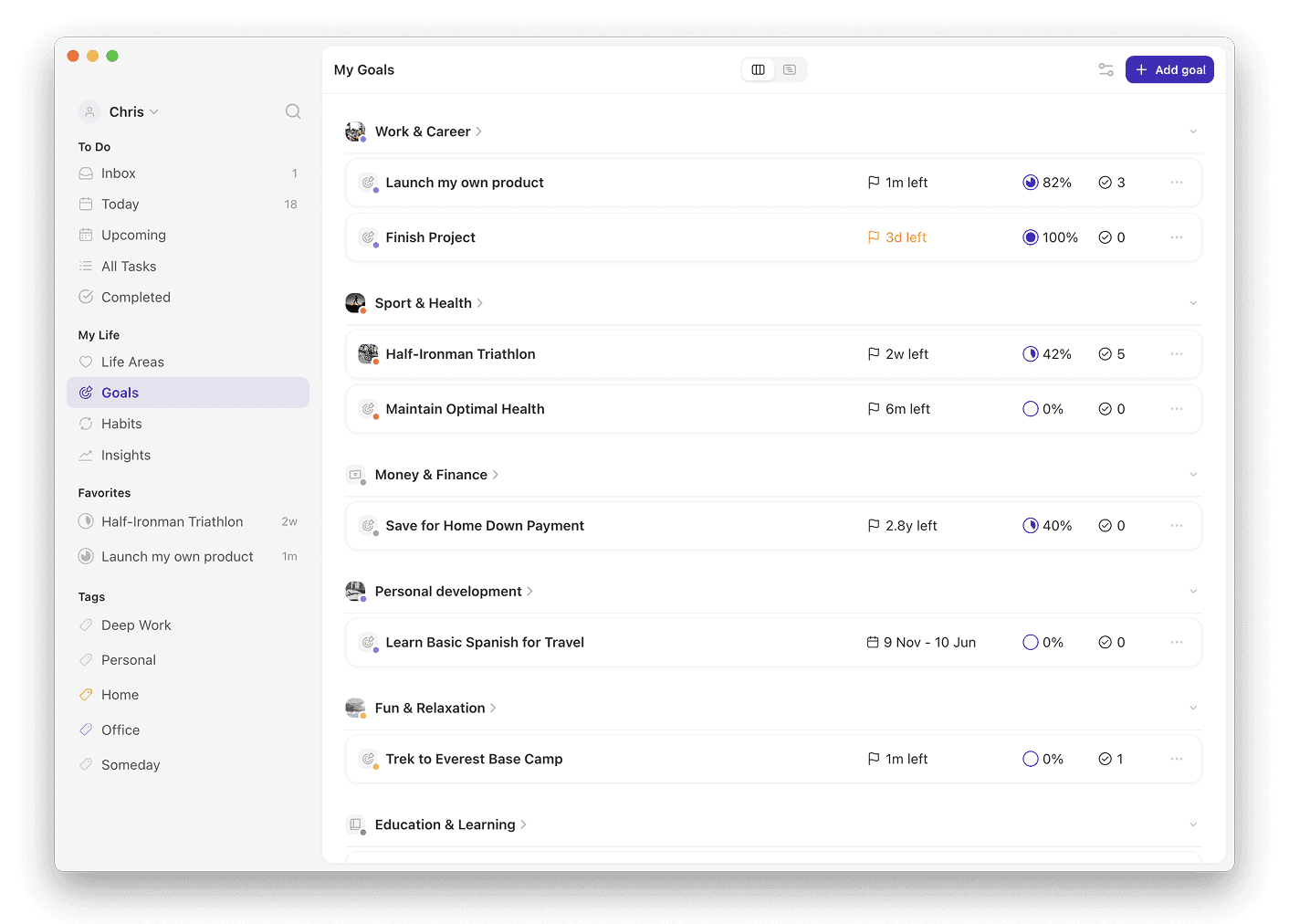
Griply is built around the exact four-layer structure a personal strategic plan requires. Life Areas sit at the top; each has a Vision field where you write what that domain looks like when it is going well. Under each vision sit Goals with a start value, target value, and deadline. Under each goal sit Subgoals that function as the quarterly checkpoints between today and the target.
Every Task and Habit in Griply can link to a goal, so the actions you link trace back to a life area and a vision. The Today view shows which goals your tasks are serving before you start work. The Goal Roadmap displays goals and subgoals on a Gantt timeline so you can see the multi-month strategy in one view. Goal Progress Tracking logs each update on a line chart so you can see whether the plan is on pace.
The plan stays current because the execution layer is the same tool as the planning layer.
How to build your personal strategic plan
Start with your life areas: the four to seven domains that matter to you (work and career, health, finances, relationships, personal growth). These become the scope of the plan.
For each life area, write a short vision statement: one to three sentences describing what that area looks like when it is going well, one to three years from now.
Under each vision, create one to three goals with a measurable target and a deadline. "Reach $200k revenue by December 2026" or "Run a half marathon by October." Break each goal into subgoals with their own deadlines. Those subgoals are the checkpoints you review monthly, not once a year.
Related questions
What is the difference between a personal strategic plan and a to-do list?
A to-do list records tasks. A personal strategic plan structures the reason those tasks exist. A task can connect to a goal, which connects to a life area and a vision. Without that structure, you have no way to know whether this week's work moved you forward.
How often should you update a personal strategic plan?
The subgoal and goal layers should be reviewed monthly or quarterly. The vision and life area layers typically stay stable for one to three years. The daily execution layer, tasks and habits, updates every day.
Can you build a personal strategic plan in Notion or a spreadsheet?
You can write the four layers in Notion or a spreadsheet, but those tools don't connect the plan to daily execution. Your tasks don't know which goal they serve, and your goals don't update when you complete work. Griply connects all four layers so the plan stays current.
How is a personal strategic plan different from OKRs?
OKRs (Objectives and Key Results) are a team-oriented goal framework from corporate planning. A personal strategic plan applies the same logic to one person's life across multiple domains. Griply's Subgoal layer maps directly to what OKRs call Key Results: a measurable checkpoint under a parent goal with a deadline.
What is the best app for a personal strategic plan?
Griply is built specifically for the four-layer structure a personal strategic plan requires. Life Areas, Vision, Goals with target values and deadlines, and Subgoals with unlimited nesting are all native objects in Griply. The Today view and Goal Roadmap connect the plan to daily execution without requiring a separate tool.