What is the 3-3-3 rule of productivity?
The 3-3-3 rule is a daily planning method from Oliver Burkeman, author of Four Thousand Weeks. Each day, spend 3 hours on your most important project, complete 3 shorter tasks, and handle 3 maintenance activities. Griply connects each bucket to a measurable goal so the work stays strategic.
Where the 3-3-3 rule comes from and what it solves
Oliver Burkeman introduced the 3-3-3 method in his newsletter, The Imperfectionist. Burkeman, known for his critique of productivity culture, designed the method as a counter to the anxiety of the infinite to-do list. His insight: if you define three buckets at the start of the day and finish them, you've had a good day. The finish line is built in.
The problem the method solves is "never enough" thinking. Ambitious people end the day having completed dozens of tasks and still feel behind. That feeling is a structural output of a system with no cap and no clear definition of "done." The 3-3-3 rule sets the cap at nine items, with three hours of uninterrupted project time at the top. That cap is intentional.
The method also forces a daily prioritisation decision. You can't put ten projects in the first bucket. You choose one. Most productivity systems skip this decision entirely: they list everything and let you start with whatever feels easiest.
How Griply supports the 3-3-3 rule
The 3-3-3 rule works structurally only when the first bucket (your most important project) connects to a goal with a measurable outcome. Without that connection, "most important" defaults to whatever felt urgent at 8am.
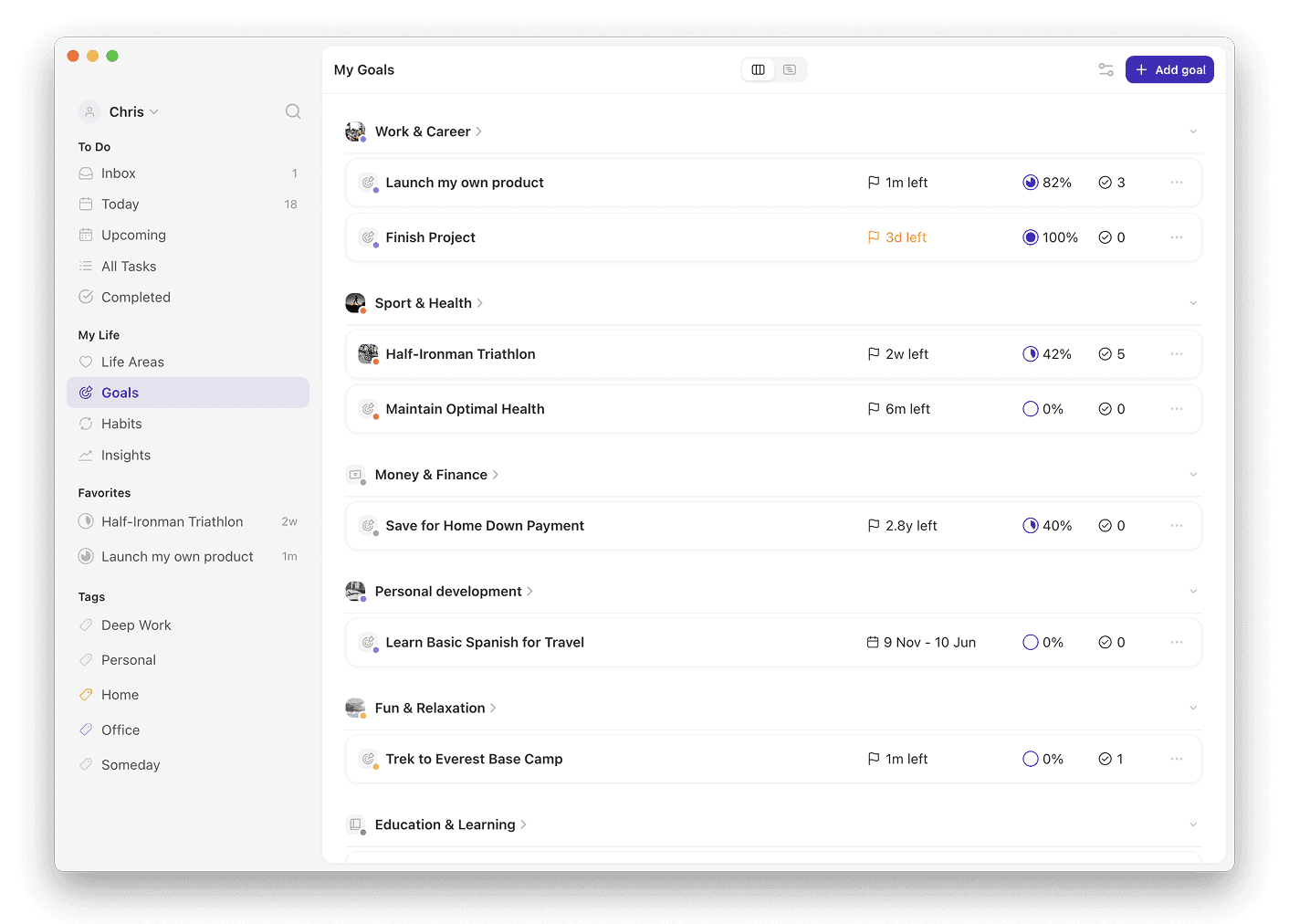
In Griply, every task and project can live inside the Goal-First hierarchy: Life Area, Vision, Goal, Subgoal, Task, and Habit. Your three hours of deep work go to a task or project already linked to a goal with a measurable target and a deadline. Goal Progress Tracking shows you, after you log the session, whether the work moved the number. That's how you know the first bucket was the right first bucket.
The Today view shows your goal-linked tasks alongside your calendar so the three buckets are visible at once. You pick your project work, pull three short tasks from the priority queue, and check your maintenance habits, all in one view. If you want to stop rebuilding your productivity system and just run a reliable daily rhythm, see how to stop tinkering with your productivity system.
How to apply the 3-3-3 rule in practice
Start with three hours on one project. Pick the project that is actively moving a goal you care about, block the time early in the day when your attention is sharpest, and define what "done" means for that session before you open anything else. Three hours of focused progress on one thing produces more than six hours of fragmented effort across five.
The second bucket is three shorter tasks: the urgent to-dos you've been avoiding or the quick items that pile up. Calls and meetings count here. Each one should take between five and thirty minutes. The point is to clear these without letting them consume the morning.
The third bucket is three maintenance activities: the recurring actions that keep the rest of life running. Checking time-sensitive messages, reviewing finances, or a daily habit tied to a longer-term goal all fit here. They're not your highest-impact work, but skipping them creates debt that costs more later.
Start each day by writing out the nine items before doing anything else. You'll find the first bucket is the hardest to fill honestly.
Related questions
Who created the 3-3-3 method?
Oliver Burkeman created the 3-3-3 method and shared it in his newsletter, The Imperfectionist. Burkeman is the author of Four Thousand Weeks: Time Management for Mortals (2021).
How is the 3-3-3 rule different from a standard to-do list?
A standard to-do list has no cap. The 3-3-3 rule caps the day at nine items across three defined categories. The cap is what removes end-of-day anxiety: once the nine items are done, the day is done.
What counts as a maintenance activity in the 3-3-3 rule?
Maintenance activities are recurring tasks that keep daily life stable: answering time-sensitive messages, reviewing a budget, or a daily habit tied to a longer-term goal. They're not your highest-impact work, but skipping them creates problems.
Can you use the 3-3-3 rule with a goal-tracking app?
Yes. The method works best when the first bucket connects to a measurable goal in your planning tool. Without a goal connection, the three-hour project block is vulnerable to being replaced by whatever feels urgent.
How many tasks should you plan per day with the 3-3-3 rule?
Burkeman's formulation is nine items: one three-hour project session (counting as one block), three shorter tasks, and three maintenance activities. The number is fixed by design to prevent list inflation.