Guide

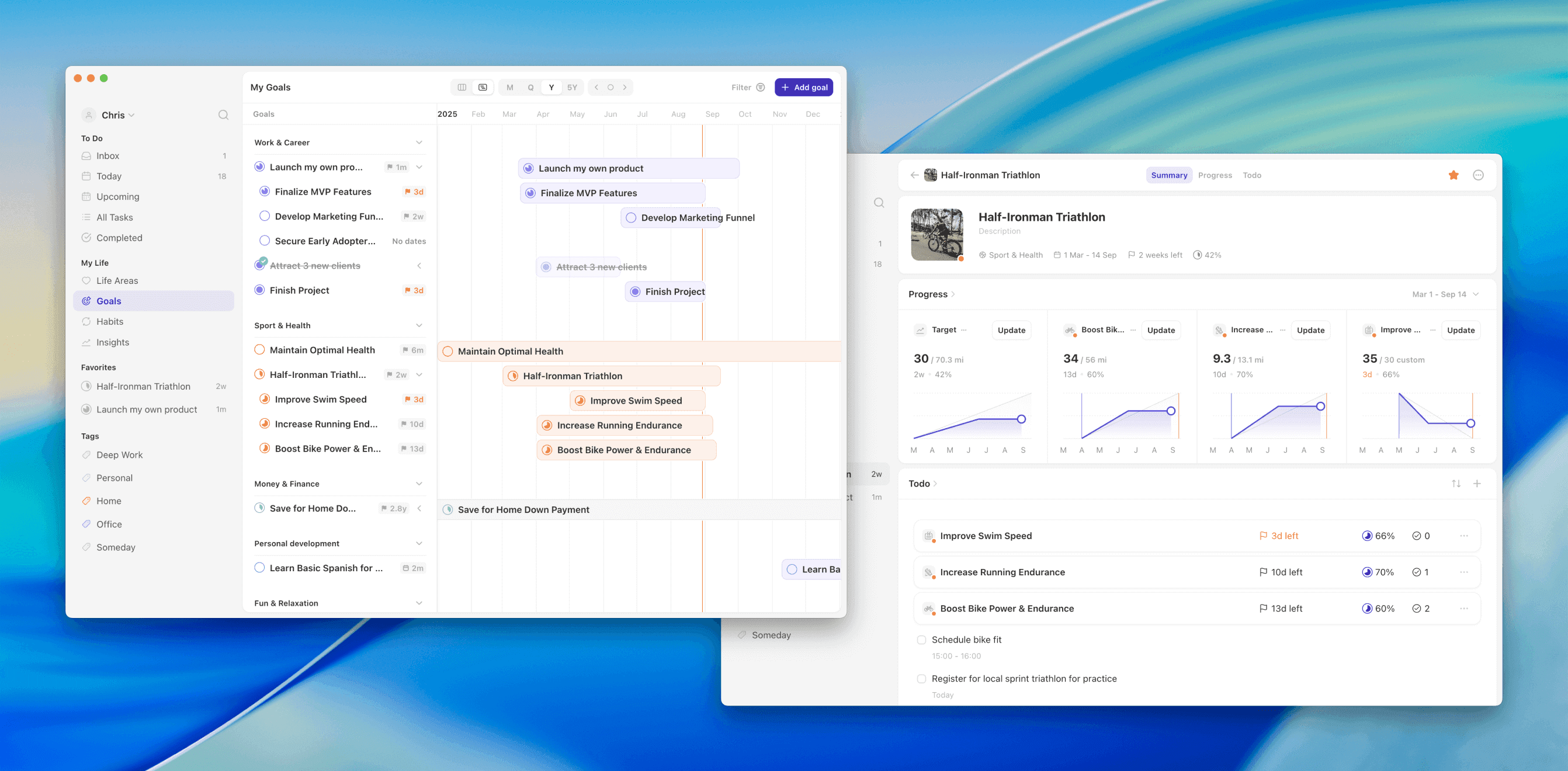
Table of Contents
This guide helps you turn intentions for 2026 into a clear, realistic plan you can actually follow. It’s designed to help you think clearly, plan realistically, and stay consistent throughout the year, so you don't just set goals and forget about them in February.
If you’ve already completed your 📘 End‑of‑Year Reflection, you’re perfectly set up to move forward. If not, you can start there first and come back once you’ve reflected on what worked, what didn’t, and what you want more of.
You don’t need to do everything in one sitting. Some people like to block a single deep‑focus session, others prefer to spread this out over a few shorter moments. Both work perfectly fine.
The 2026 Planning Process
This guide walks you through the following steps:
Set up your life areas so they reflect your priorities for 2026
Define realistic goals for the year, guided by your end-of-year reflection
Make your Q1 goals measurable, so progress is clear
Break Q1 goals down into subgoals, habits, and tasks
Check whether your plans fit your available time
Plan your week, turning goals into daily action
Build review routines to adjust and stay consistent throughout 2026
You can use this overview as a reference while working through the steps below.
Preparation: Create The Right Conditions
Before you start setting goals, give yourself space to think clearly. Planning works best when you’re not rushed and not distracted.
Block 1-2 hours in your calendar and choose a place where you won’t be interrupted. This may feel like a big time investment, but clarity saves time later. A good plan helps you avoid chasing the wrong goals and spreading your energy too thin.
If 1-2 hours feels like too much, break this guide into multiple sessions. Progress matters more than speed.
Ready? Open the app and let's get started:
Step 1: Set Up Your Life Areas
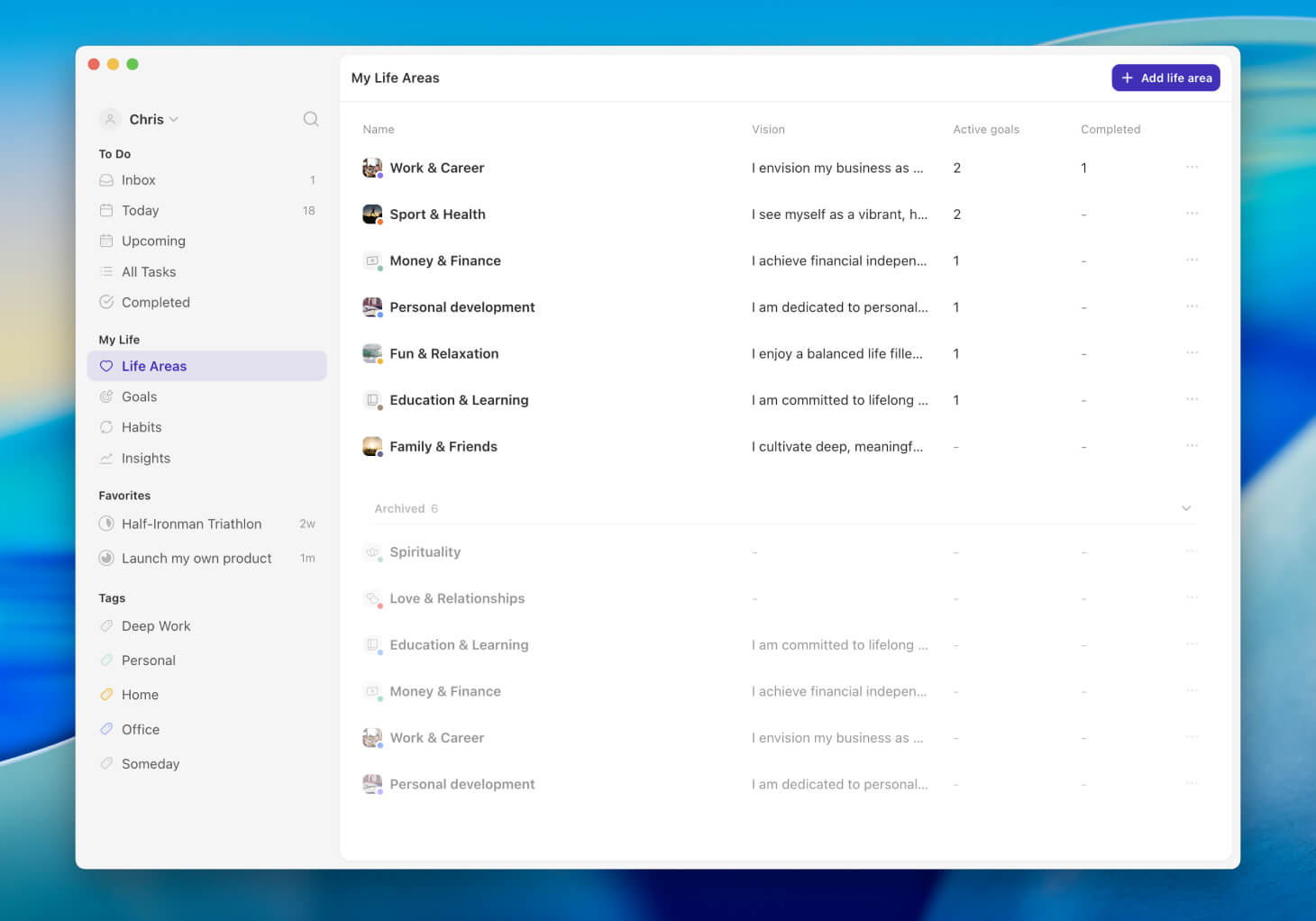
Life areas are the foundation of your system in Griply. They represent the main parts of your life and help you keep your goals balanced.
Start by reviewing your current life areas:
Make sure they reflect your personal life
Add new areas if something important is missing (for example: Home, Side Hustle, or Chores)
Archive areas that are not relevant to you.
Once your life areas reflect your actual life, reorder them so your most important life area for 2026 is at the top. This makes your priorities visible every time you open the app and subtly guides your focus throughout the year.
Add a Short Vision For Your Most Important Life Areas
Once your life areas reflect your actual life, take a moment to define a short vision for the areas that matter most in 2026.
A vision is not a goal or a task list. It’s a simple description of direction. A few sentences are enough.
Examples
Work & Career: “I’m working toward a career with more freedom and flexibility, where I’m less dependent on constant reactivity and more focused on building something of my own."
Sport & Health: “I take care of my body in a way that feels sustainable, so I can stay active, energized, and healthy for years to come.”
If you already have a vision, use this moment to check whether it still aligns with where you want to go in 2026. If it does, keep it. If it doesn’t, refine it lightly. You’re not trying to write something perfect, you’re creating a clear filter for the goals you’ll choose next.
Step 2: Map Out Your Goals For 2026
2a. Decide What Belongs In Your 2026 Plan
Now you’ll define what you want to work toward in 2026, using what you’ve learned from your past year.
If you’ve completed the 📘 End‑of‑Year Reflection, use the insights from that guide as input here. Patterns around energy, priorities, unfinished goals, or neglected life areas are valuable signals. Let them inform your goals for 2026. This step isn’t about analyzing further, but about choosing what you’re willing to commit time and energy to in the year ahead.
Before adding new goals, briefly check whether you have goals that are already in progress. Some unfinished goals are still worth pursuing in 2026, others are better left behind. Decide consciously which ones deserve a place in your plan.
2b. Add Goals With Intention
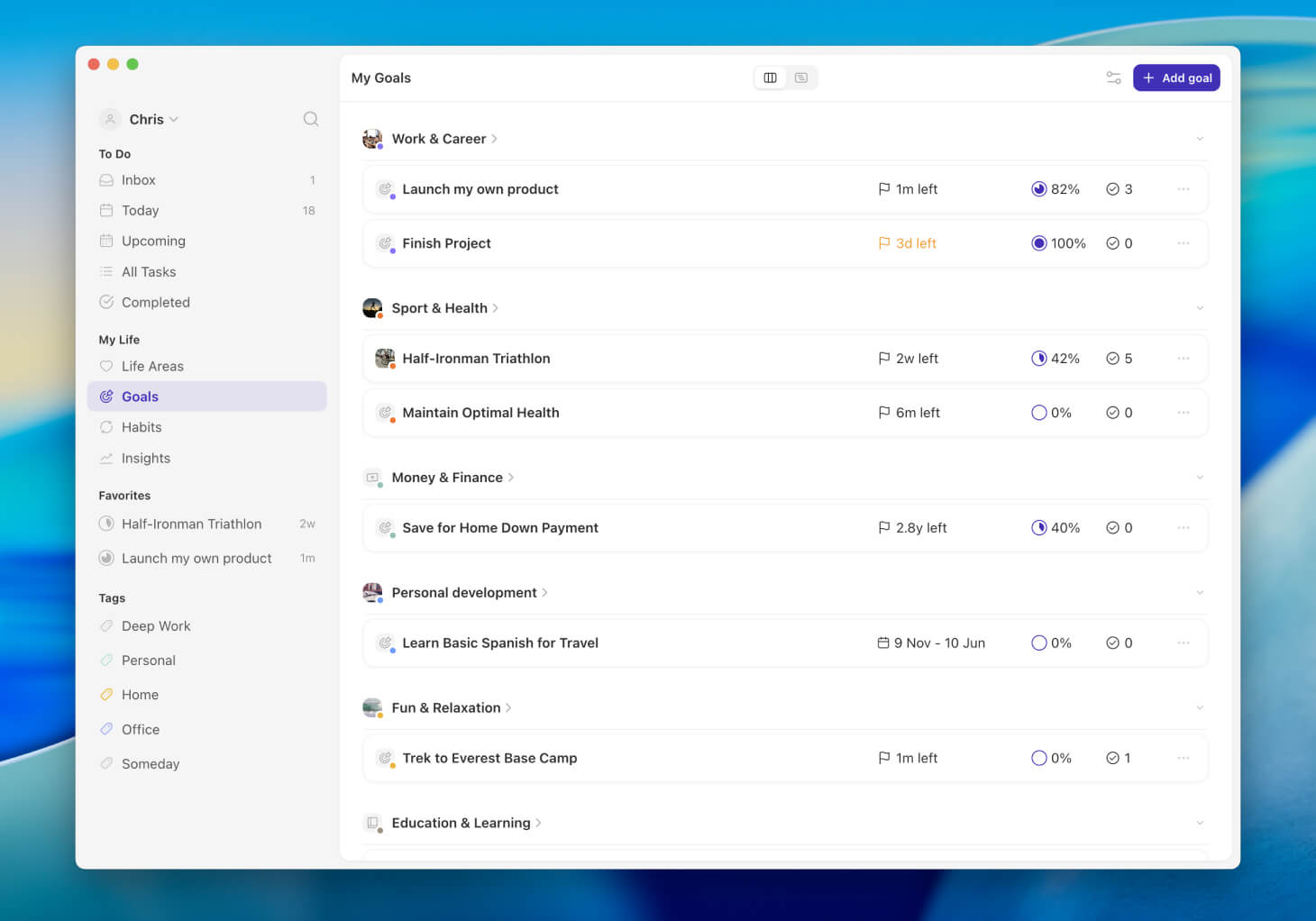
Then, start adding goals:
Begin with your most important life area
If you’re new to goal-setting, start with one goal you feel confident you can achieve
Momentum matters more than ambition
2c. Keep Your Goals Realistic By Planning Them On The Timeline
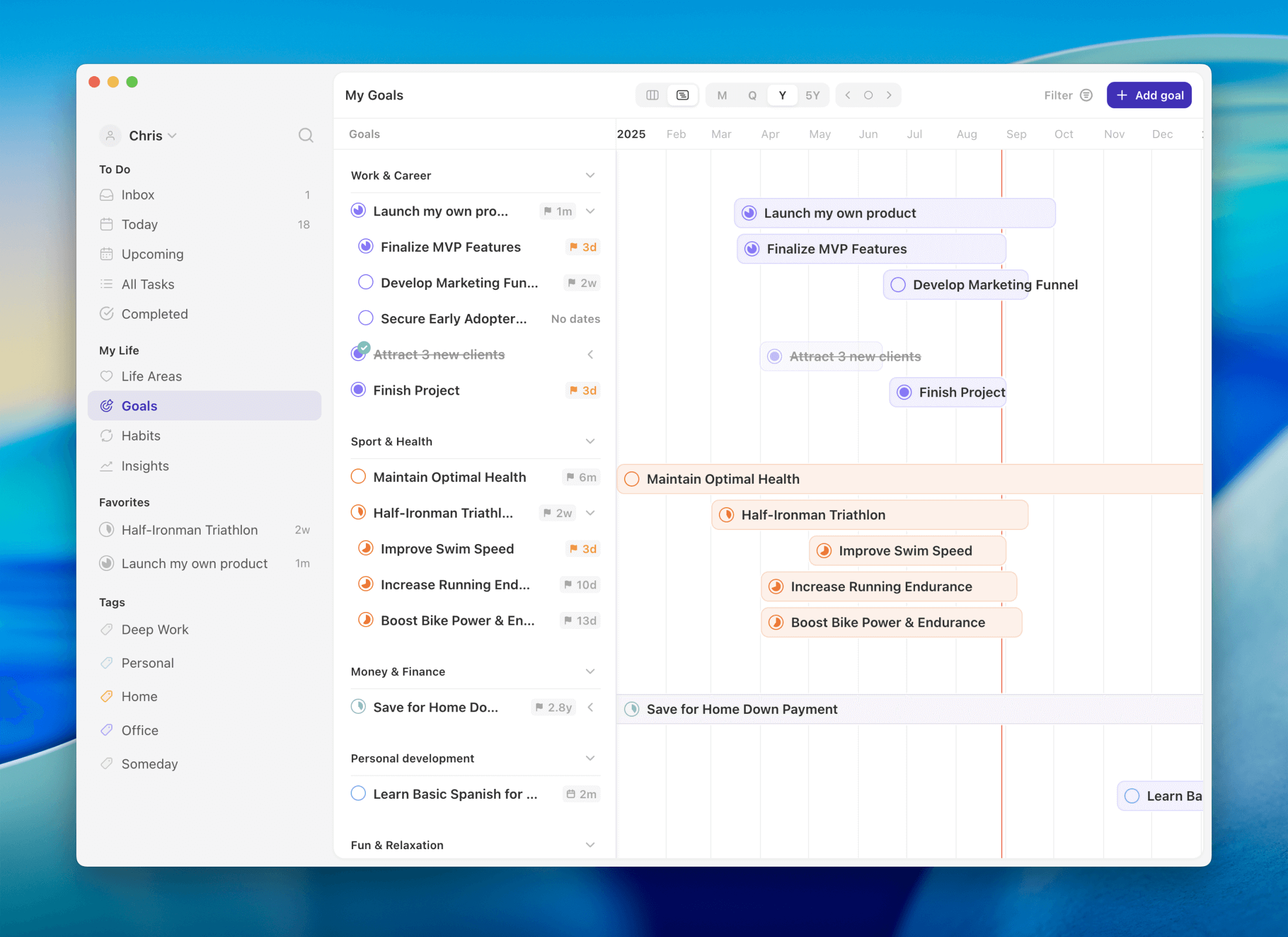
This step is less about ambition and more about honesty. A realistic plan is far more motivating than an overfilled one.
Once you’ve added goals, in the Goals section, switch to the timeline view (at the top) and assign a rough timeframe.
This is your first reality check:
Do these goals realistically fit into 2026?
Do I have the time and energy to work on all of them?
If you notice that you’ve planned too much, remove the dates from the goals that don’t fit right now. You’re not deleting them, you can always pick them up later. Planning realistically leads to far better results than planning too much and not following through.
A helpful exercise is to estimate how much time each goal will take on a weekly basis. This doesn’t need to be exact. A rough estimate is enough to see whether your plan fits into real life.
Be honest about your available time:
Include sleep, commuting, rest, and chores
Leave space for the unexpected
Avoid being overly optimistic, as that often leads to frustration later
Finally, zoom out and look at all your life areas together. If everything is focused on one area (for example work), consider adding one or two smaller goals in other areas like health, relationships, or fun to keep 2026 sustainable and enjoyable.
Step 3: Make Your Goals Measurable
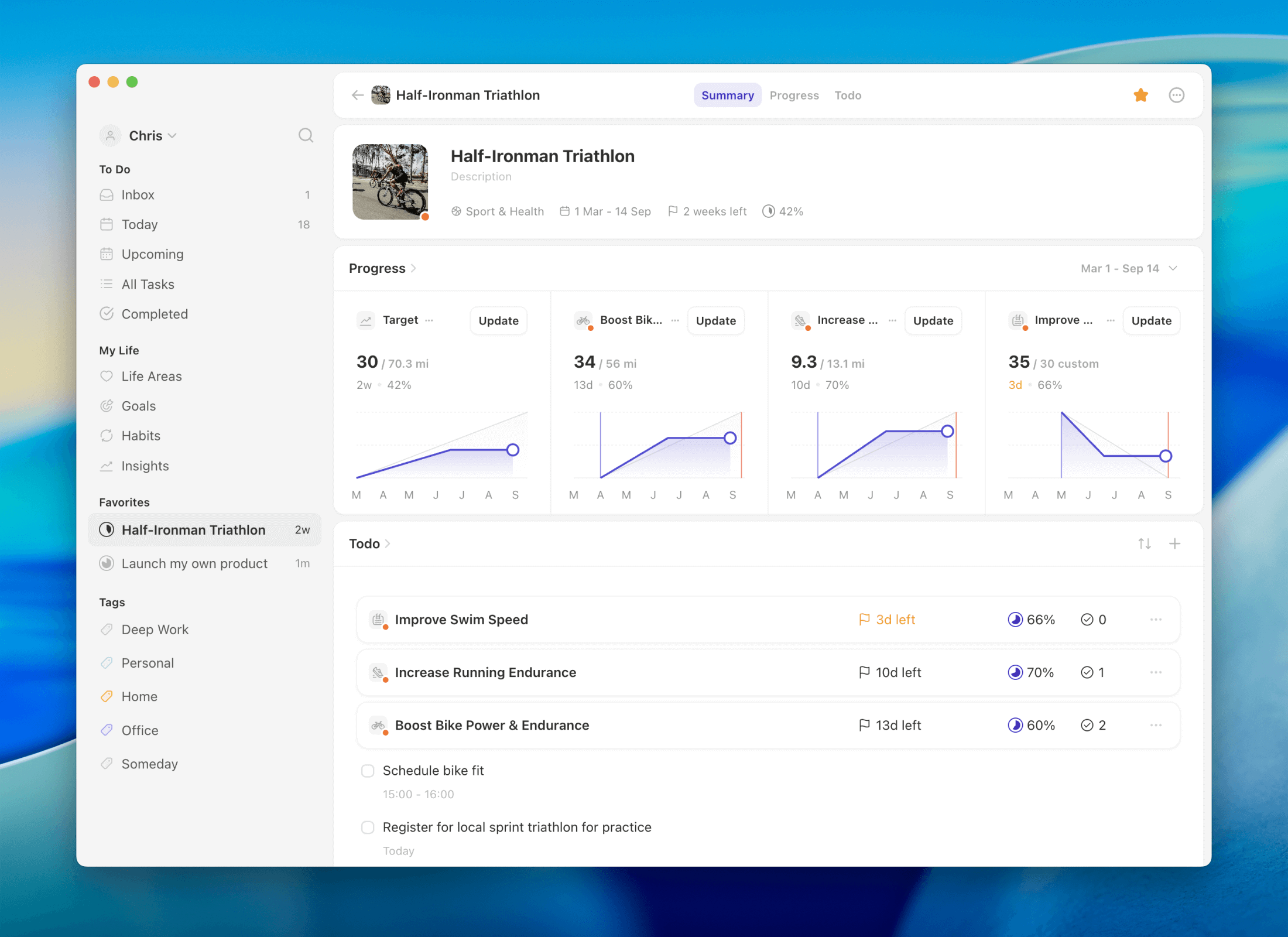
Clear metrics create clarity and momentum.
To keep planning manageable, focus on making goals measurable for your Q1 goals only. You’ll revisit and refine goals for the next quarters during your quarterly reviews.
A goal becomes much easier to follow when you can see progress.
For each Q1 goal, choose a measurable target that answers the question: How do I know I’m moving forward?
Good metrics:
Are within your control
Reflect real progress, not just outcomes
Examples:
Pages written
Kilometers run
Sessions completed
Revenue generated
If a goal is difficult to measure, you can always track it by tasks completed. This still gives you momentum and visibility without overcomplicating things.
If you want more guidance here, you can read the help article on making goals measurable.
Step 4: Break Your Goals Down
This is where your goals become actionable.
Breaking goals down is powerful, but doing this for the entire year at once can be overwhelming. Focus on Q1 goals only. You’ll repeat this process for future quarters during your reviews.
4a. Create Subgoals
For larger Q1 goals, create subgoals that represent meaningful milestones.
For example:
“Start my own business” → launch website, sign first 10 clients, validate pricing
Subgoals improve clarity and actionability. Map them on the timeline so it’s clear what needs attention in Q1.
4b. Build Supportive Habits
Habits are the engine of consistent progress. They protect consistency even when motivation dips.
With your Q1 goals defined, ask yourself: What do I need to do regularly for this goal to succeed?
Examples:
Training for a marathon → running 4 times per week and strength training once a week
Starting a business → reaching out to potential clients weekly
Learning a new skill → studying or practicing 20 minutes per day
You can also add standalone habits or routines that don’t belong to a specific goal, but still improve your daily structure or well-being.
Don’t introduce too many new habits at once. Focus on building one or two new habits at a time.
Tip: The easiest way to add habits is by using natural language input.
4c. Break Goals Into Tasks
Now list the main tasks required to achieve each Q1 goal or subgoal.
At this stage:
Focus on the bigger tasks
Don’t try to capture every tiny step yet
When creating tasks, add rough time estimates (for example: 30m, 1h, or 2h). You can easily do this using natural language input.
Add deadlines where they truly matter, and group tasks into sections if that helps you stay organized by topic or timeframe.
Step 5: Check Time Realism Again
With goals broken down into tasks, revisit your goal timeline.
You now have much better insight into how much time your plans require. Adjust timelines if needed. Stretching a goal is far better than abandoning it later due to overload.
This step is about protecting consistency, not lowering ambition.
Step 6: Plan Your Week
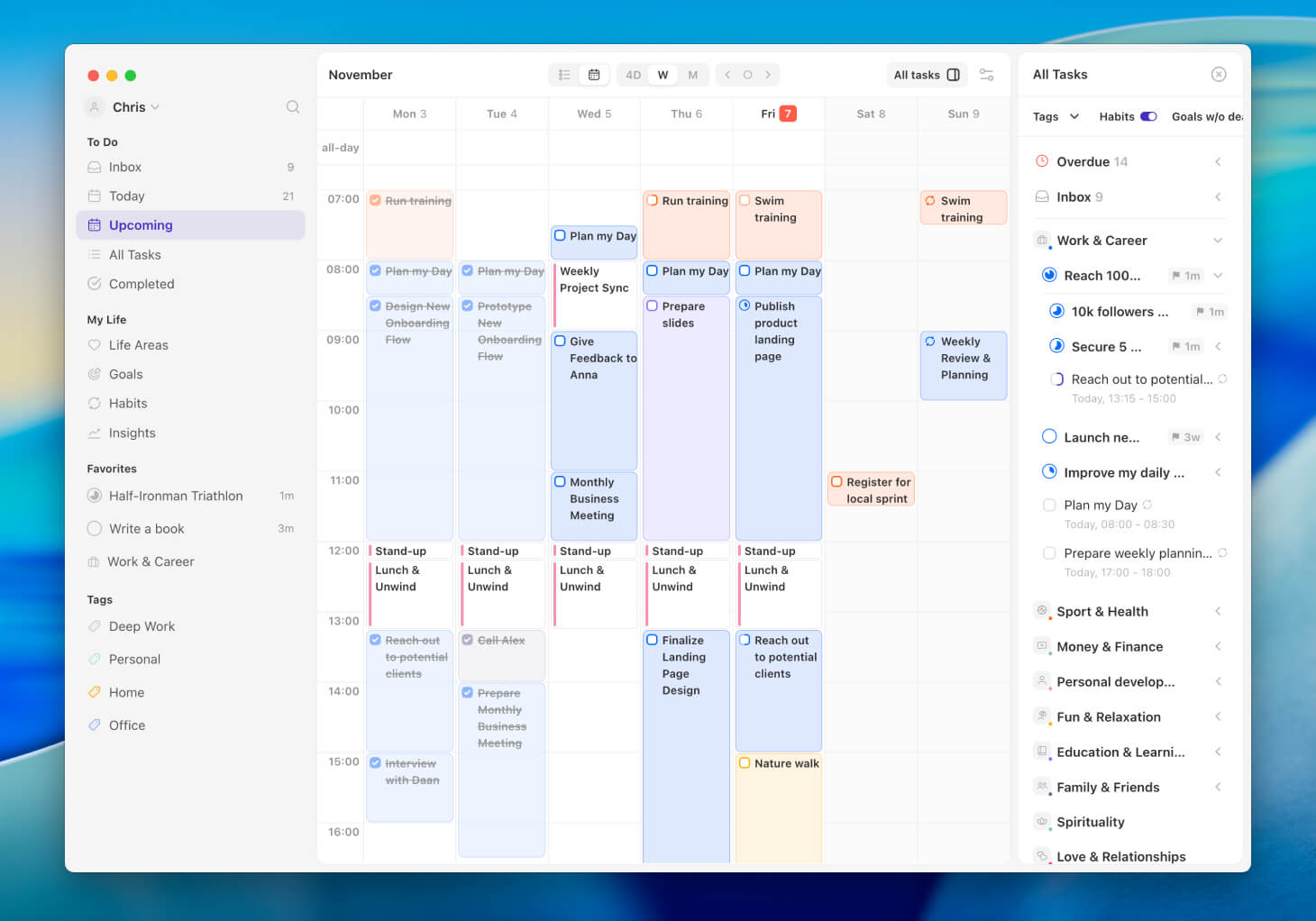
Long-term goals are achieved through short-term execution.
Go to the Upcoming tab and plan your week:
Drag tasks into your weekly calendar
Break tasks that take more than a full day into smaller, actionable steps
Use subtasks to make complex work feel more approachable
Tip: You can also schedule each habit occurrence on different days and times, so habits truly fit your real-life schedule. This flexibility is unique to Griply and makes habits much easier to maintain.
During the week, expect plans to change. Adjust when needed, flexibility supports consistency.
Learn more about planning your weeks and days here.
Step 7: Review, Adjust, And Stay Consistent
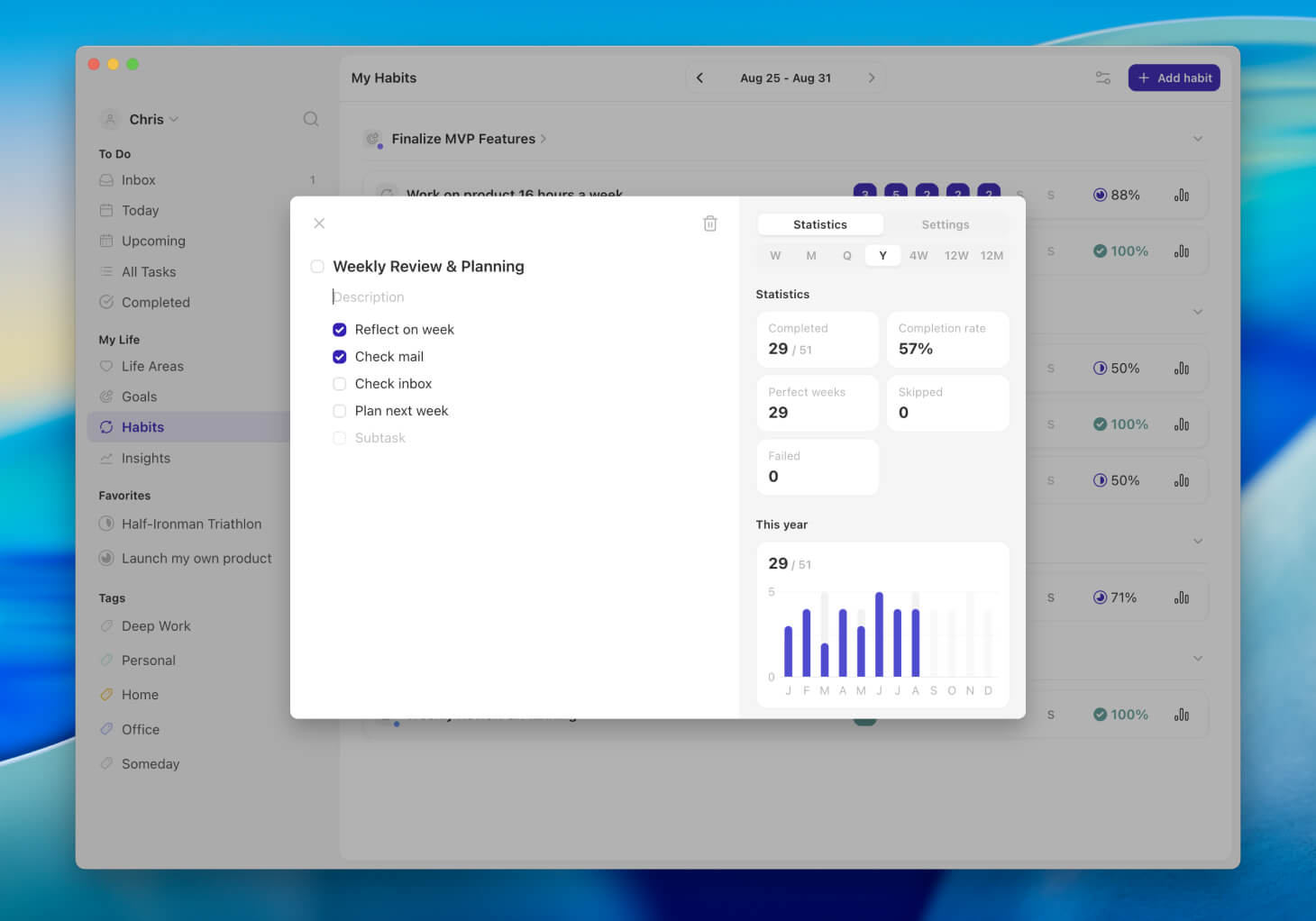
This is the most important step and the one most people skip.
Goals aren’t achieved by planning once. They’re achieved by building feedback loops. Reviews are what keep your system aligned with real life, instead of slowly drifting away from it.
Life changes, priorities shift, and unexpected things come up. Regular reviews help you course-correct early, instead of abandoning goals entirely when plans no longer fit reality.
Weekly Review
Once a week, take time to:
Review your goal timeline
Adjust plans if priorities or capacity changed
Identify the most impactful tasks for the upcoming week
This review keeps your system alive and responsive.
Tip: Create a habit for your weekly review so it becomes part of your routine.
Monthly Review
At the end of each month, zoom out:
What moved forward?
What stalled and why?
What deserves more or less attention next month?
Again, consider making this a habit so it doesn’t get skipped when life gets busy.
Quarterly Review
Quarterly reviews are where bigger adjustments happen.
Revisit your vision for 2026, reflect on the past quarter, and decide which goals deserve focus next. This is the moment where you plan the next quarter’s goals, metrics, breakdowns, and habits.
Consistency doesn’t mean sticking to a plan at all costs. It means staying engaged and adjusting intentionally.
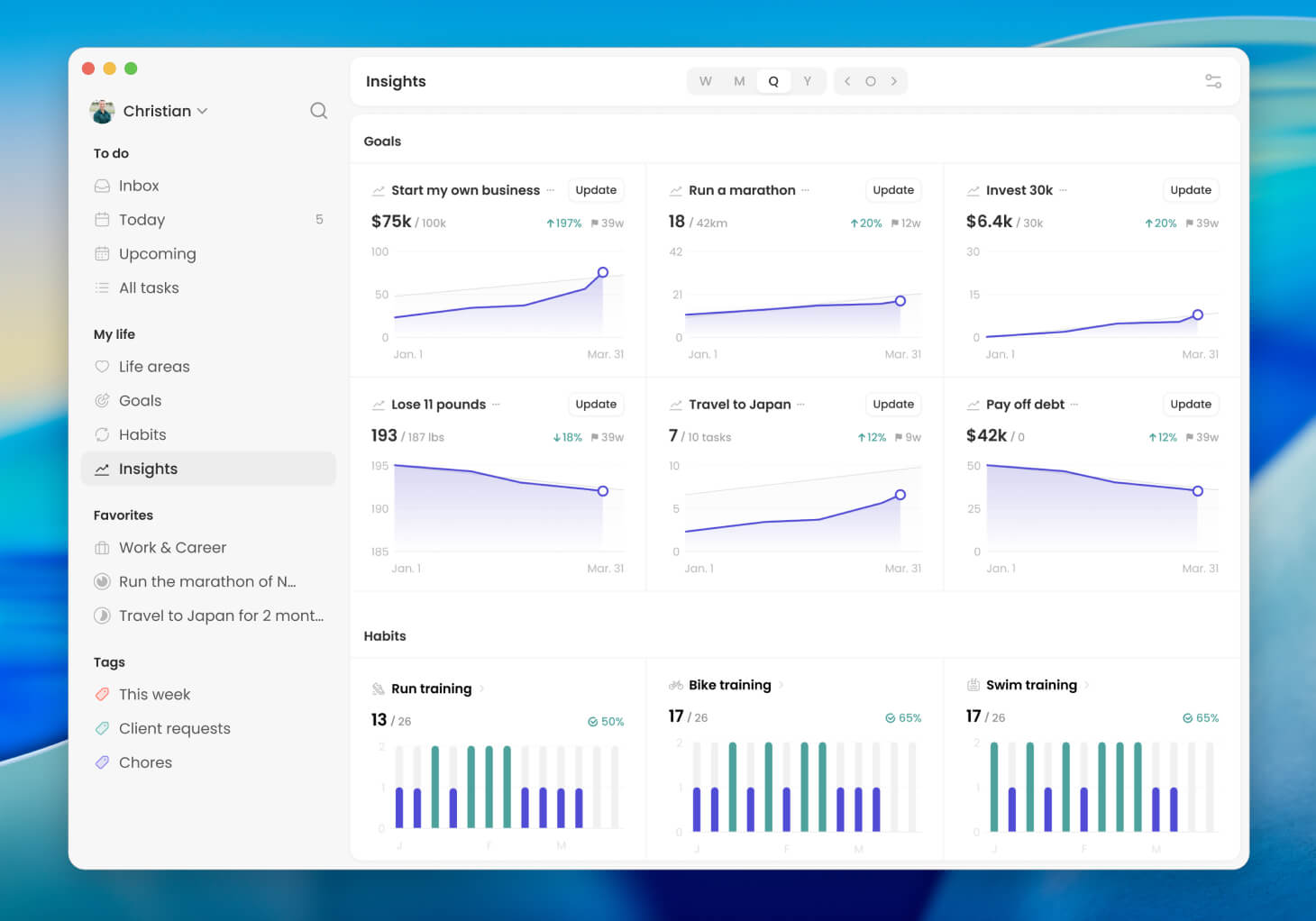
Tip: Use the Insights view to reflect on your progress
During your reviews, open the Insights view to get a clear overview of how your goals and habits are progressing over time.
Seeing your progress visually helps you move beyond gut feeling. You can quickly spot what’s working, where consistency is building, and where things may need adjustment.
Final Note
Planning your goals for 2026 isn’t about predicting the year perfectly. It’s about creating a system that helps you move forward with intention, even when things change.
Griply connects your life areas, goals, habits, and daily actions into one clear system so planning and execution support each other.
If you ever feel stuck or unsure about your setup, don’t hesitate to contact us at [email protected] or join one of our communities to discuss your setup with others in our Reddit community.
We can't wait to see what you'll achieve.