Guide


Table of Contents
The hardest part of an end-of-year review is the blank page. We often want to reflect, but without specific prompts, we end up with a generic list of 'ups and downs' that offers no real insight.
To get deep answers, you need deep questions.
This guide is your resource bank. We have curated 101 questions across every life area (from Career to Spirituality) designed to break writer's block and help you uncover the actionable data hidden in your past year.
Key Takeaways
Overcome "Reflector's Block": The hardest part of reflection is knowing where to start. This list provides specific entry points for every area of your life to get the ink flowing.
Data Over Nostalgia: Good questions move you past simple nostalgia ("That was a fun trip") and into analysis ("Why did that trip energize me?"), providing the data needed for future planning.
Holistic Coverage: We cover all 9 essential life areas (Work, Health, Love, Spirituality, etc.) to ensure no part of your year is left unexamined.
The "42% Effect": Don't just read these questions. Research from Dr. Gail Matthews shows that writing down your answers increases your goal achievement probability by 42%.
How to Use This List
You do not need to answer every single question below in one sitting. That would be exhausting. Instead, think of this list as a menu.
Pick Your "Power Questions" Scan the headers below and identify the prompts that trigger an immediate emotional reaction. If a question makes you feel excited or uncomfortable, that is a sign you need to answer it.
Write Unfiltered Don't edit as you go. Let your pen move across the page without worrying about grammar, structure, or "sounding smart." The goal is to bypass your inner critic and access your subconscious thoughts.
Use the Companion Guide This article is a list of questions. If you are looking for a step-by-step process on how to set up your environment, analyze your answers, and build a system, we recommend starting with our framework guide: 📘 End of Year Reflection: A Guide to Reviewing 2025.
Part 1: The Big Picture (Warm-Up)
Start here to loosen up your memory. These high-level questions help you capture the overarching "vibe" and major themes of 2025 before getting into the details.
If you had to describe 2025 in just three words, what would they be and why?
What was the single most important lesson you learned this year?
What was your biggest win, and why does it matter to you?
What was the hardest challenge you overcame?
What was the best decision you made all year?
What new habit had the highest positive impact on your life?
What did you let go of (a belief, a person, a habit)?
What was the best thing that happened to you unexpectedly?
What was your biggest failure, and what did it teach me?
How are you different today than you were on January 1st, 2025?
Part 2: Work & Career
Assess your professional trajectory, leadership, and satisfaction. Are you moving closer to your long-term ambitions?
What new hard or soft skills did I acquire, and how did I use them?
The Energy Audit: Which specific project energized me the most? Which one drained me?
What was my biggest tangible professional accomplishment?
How did my leadership or communication style evolve?
What is the most valuable piece of feedback I received?
Did my daily work align with my core personal values?
How did my relationship with my manager change?
Did I say "yes" to things I should have said "no" to?
Did I step out of my comfort zone professionally?
What steps did I take to help my team members grow?
Part 3: Sport & Health
Your physical and mental well-being is the foundation for everything else. Be honest about how you maintained your "engine".
When did I feel the most physically alive and energetic?
What new health habit is now a permanent part of my routine?
Did I prioritize my sleep? What impacted my sleep quality the most?
How effectively did I manage stress? Did I reach burnout?
What activity gave me the deepest rest?
Did I prioritize my well-being, or did it take a backseat?
How did my diet affect my mood and focus?
What new habit supported my mental health specifically?
Did I ignore any warning signs from my body?
What is one specific way I can better care for myself next year?
Part 4: Money & Finance
Look at the numbers to gauge your stability and freedom. This isn't just about math; it's about your relationship with money .
Did I reach my savings goal?
What was my single smartest purchase?
What purchase do I regret the most?
Did I stick to my budget? Where did the leaks happen?
What was my biggest financial win?
Did I invest as much as I planned to?
How has my financial situation changed since January?
Am I on track for big long-term goals (house, retirement)?
What was my biggest financial mistake or lesson?
What is the one financial habit I need to build in 2026?
Part 5: Personal Development
This category covers your character, your mindset, and your self-mastery. Who are you becoming?
What belief or assumption of mine was challenged this year?
What fear did I face head-on?
How was my self-talk? Was I my own coach or my own critic?
Did I live by my core values?
What surprised me most about myself?
Did I allow myself to be vulnerable?
How did I handle conflict this year?
What is a "someday" dream I took a step toward this year?
Did I keep the promises I made to myself?
Who do I want to become in 2026?
Part 6: Fun & Relaxation
Productivity is not the only metric of a life. Did you make time for joy, play, and restoration?
When did I laugh the hardest this year?
Did I allow myself to have "unproductive" downtime?
What was the most fun thing I did just for the sake of it?
Did I take enough time off work?
What new hobby or game did I try?
Did I explore new places (travel or local)?
What was my favorite way to spend a Saturday morning?
Did I spend too much time on screens during my downtime?
What activity made me lose track of time (flow state)?
What is one adventure I want to go on next year?
Part 7: Education & Learning
Your intellectual growth and curiosity. This is distinct from career skills—this is about feeding your mind.
What was the best book I read this year?
What podcast or article shifted my perspective?
What am I most curious about learning next year?
Did I take a course or workshop?
What is a topic I know much more about now than I did in January?
Who was my best teacher or mentor this year?
Did I make time for deep thinking/reading?
What skill did I start learning but give up on? (And why?)
Did I share my knowledge with others?
What is one subject I want to master in 2026?
Part 8: Family & Friends
Evaluate the quality of your social circle and platonic connections. Are you nurturing the people who matter?
Which friendships gave me energy? Which ones drained me?
Who was the best new person who entered my life?
Did I set and hold healthy boundaries with family/friends?
Who am I most grateful for?
Did I spend enough quality time with the people who matter most?
What was the most meaningful conversation I had with a friend?
Is there a friendship I need to repair or release?
Who did I help this year? Who helped me?
Did I show up for my friends when they needed me?
What is one thing I can do to be a better friend next year?
Part 9: Love & Relationships
Reflect on your romantic life (current partner, dating life, or relationship with yourself regarding love).
How did I show love to my partner (or myself) this year?
What was the most romantic moment of the year?
How did we handle disagreements? Was it constructive?
Did I communicate my needs clearly?
Did I listen to understand, or just to reply?
What is one way our relationship grew stronger?
(If single) Was I happy with my solitude or dating life?
Did I let past relationships affect my present?
What is my favorite memory with my partner this year?
What is one thing I want to improve in my love life next year?
Part 10: Spirituality
Your sense of purpose, connection to something bigger, and inner peace.
When did I feel most connected to the universe/nature/God?
Did I make time for silence, meditation, or prayer?
What gave my life a sense of meaning this year?
Did I practice gratitude regularly?
How did I handle the "unanswerable" questions of life?
Did I feel aligned with my higher purpose?
Part 11: Rapid Fire Questions
Quickly list your "Best of the Year" to jog your memory and end on a high note. These often reveal what actually brought you joy.
Best movie or TV show you watched?
The song you played on repeat?
Best meal you ate?
Best purchase under $50?
The one word you want to define 2026?
From Reflection to Reality: The Next Step
You now have a notebook full of answers. But raw data isn't a plan.
The biggest mistake people make after this exercise is closing their journal and walking away. They have great insights, but no system to connect them to their daily lives. This is why most "lightbulb moments" fade away by February.
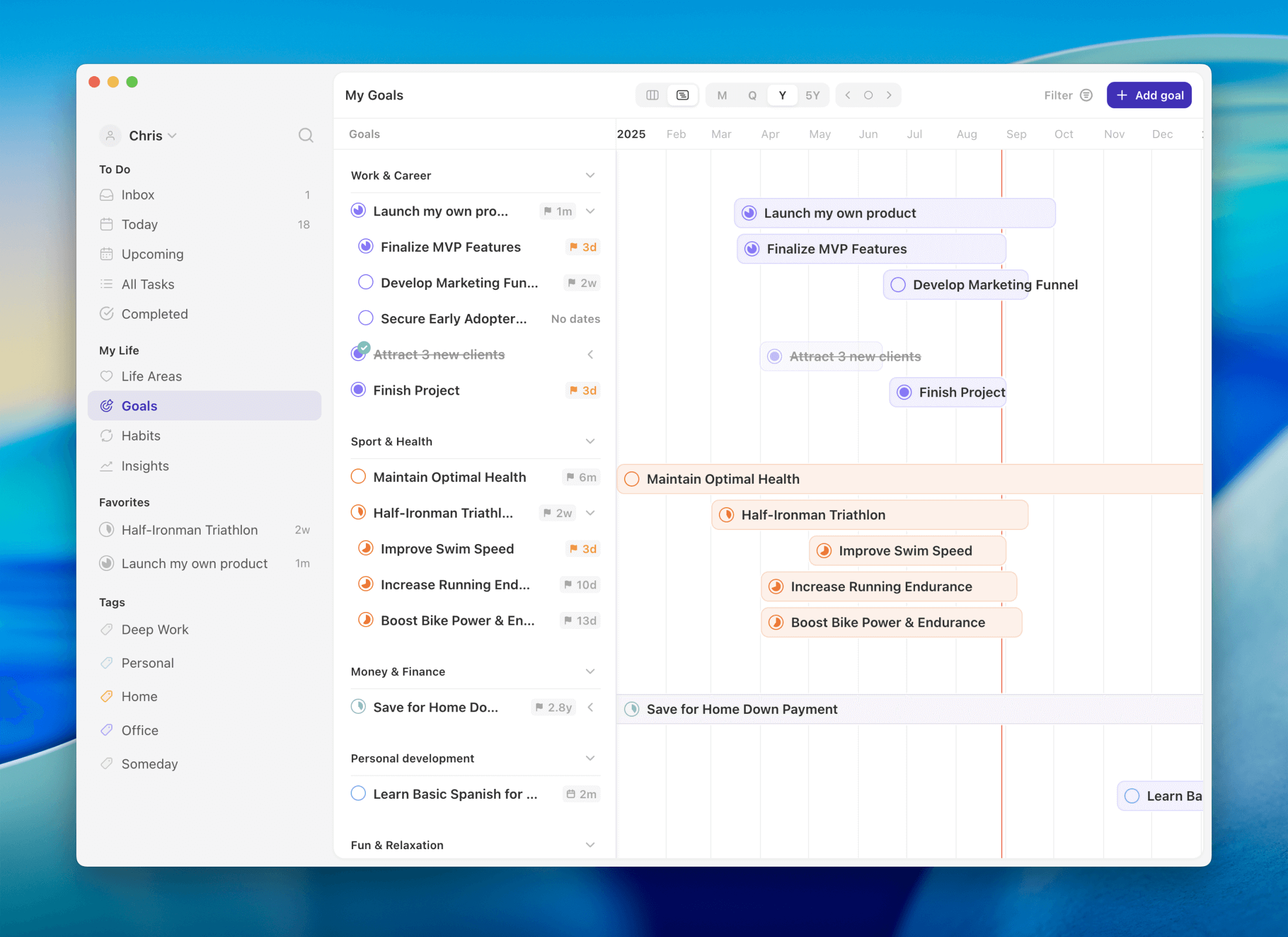
To make 2026 different, you need to translate your notes into a concrete system. Here is how to do it using a tool like Griply:
The Ultimate Guide to Planning a Meaningful 2026
Turn your insights into a plan
Learn more
Frequently Asked Questions (FAQ)
What are the best questions for self-reflection?
Effective reflection questions cover "The 3 Timeframes": The Past (What went well? What didn't?), The Present (How do I feel right now? What is my energy level?), and The Future (Who do I want to become? What will I change?).
Do I have to answer all 101 questions?
No. We recommend scanning the list and choosing the 3-5 questions per category that trigger an emotional response. It is better to answer 10 questions deeply than 101 questions superficially.
How do you structure an end-of-year review?
A complete review follows four steps: Preparation (Scheduling time and gathering data), Reflection (Answering questions like these), Analysis (Identifying patterns and lessons), and Planning (Turning insights into goals).
Why is reflection important for productivity?
Reflection prevents you from repeating the same mistakes. Research by Lawrence J. Becker found that feedback (reflection) combined with goal setting is significantly more effective than goal setting alone. It provides the "data" needed to bridge the gap between your ambition and your reality.
Conclusion: Stop Listing Goals, Start Achieving Them
A year is more than just 365 days; it is a collection of lessons, achievements, and opportunities for growth. By taking the time to conduct a structured reflection, you honor the past and arm yourself with the wisdom needed to design the future .
Ready to turn these reflections into an actionable plan for 2026? 📘 See how Griply can help you build your most intentional year yet.
Works Cited
Norcross J. C., Vangarelli D. J. "The resolution solution: longitudinal examination of New Year's change attempts." National Library of Medicine, 1988, https://pubmed.ncbi.nlm.nih.gov/2980864/
Matthews, Gail. "Study focuses on strategies for achieving goals, resolutions." Dominican University of California, 2015, https://scholar.dominican.edu/cgi/viewcontent.cgi?article=1265&context=news-releases