
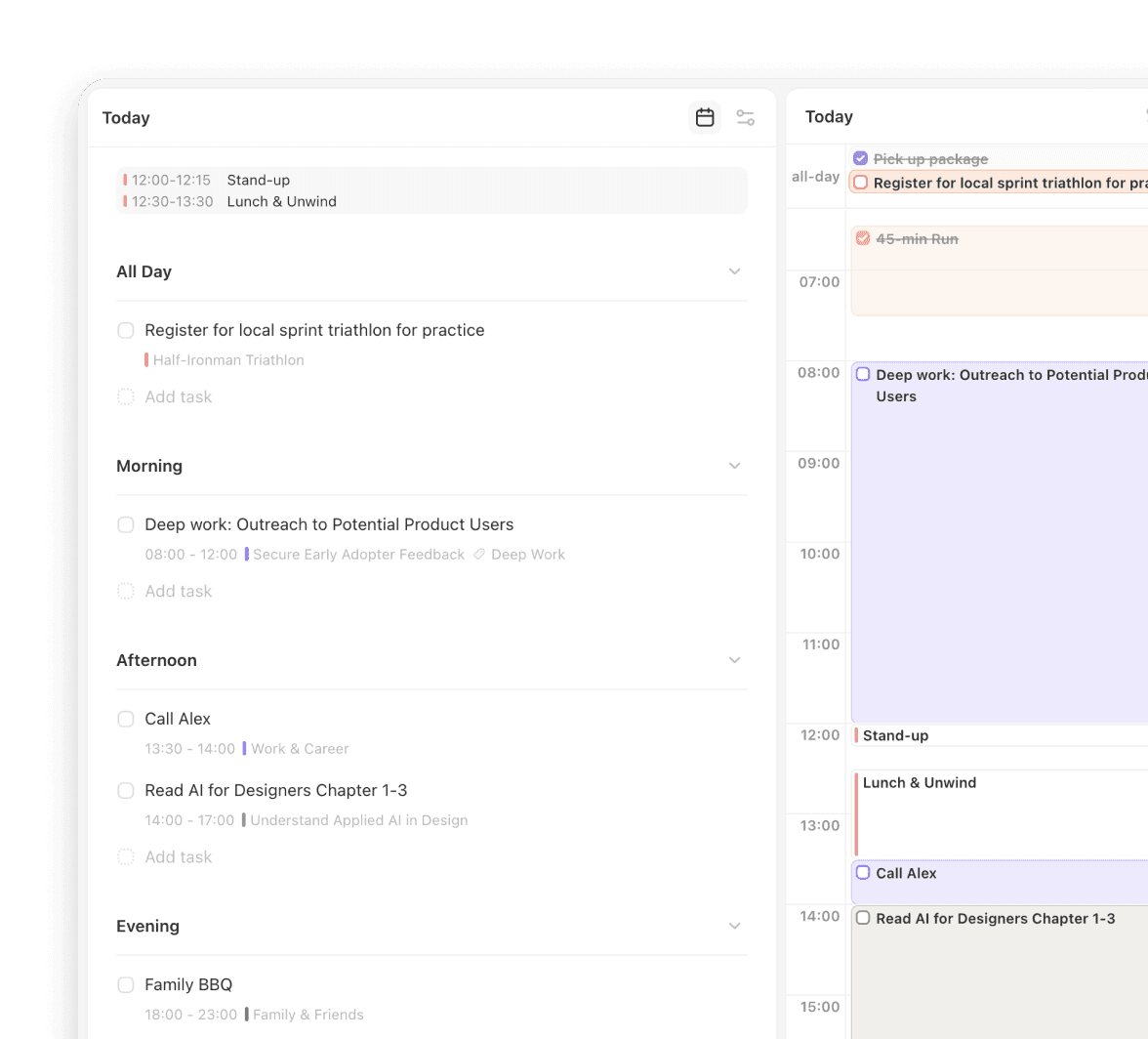
Your tasks and goals in the same system
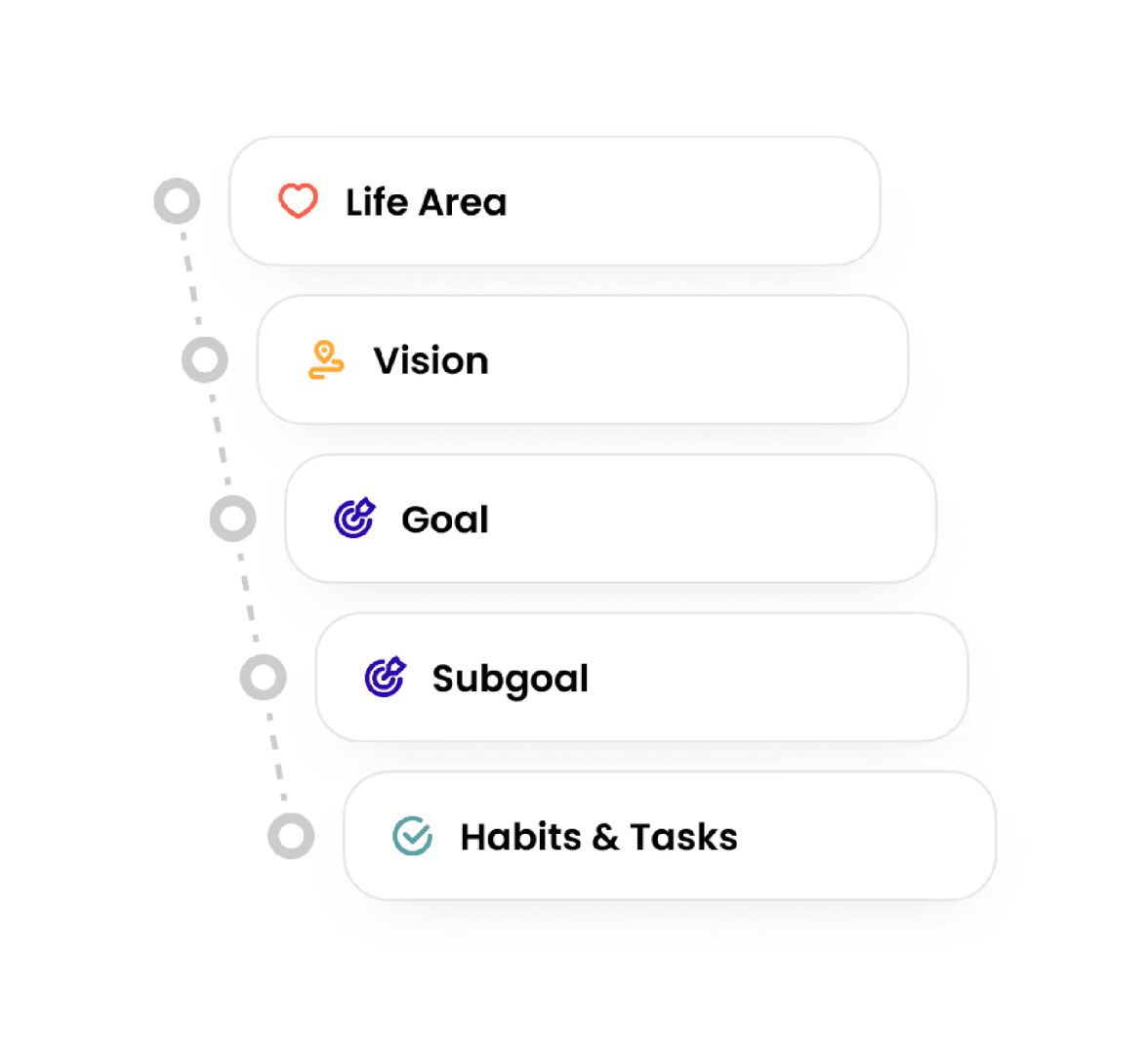
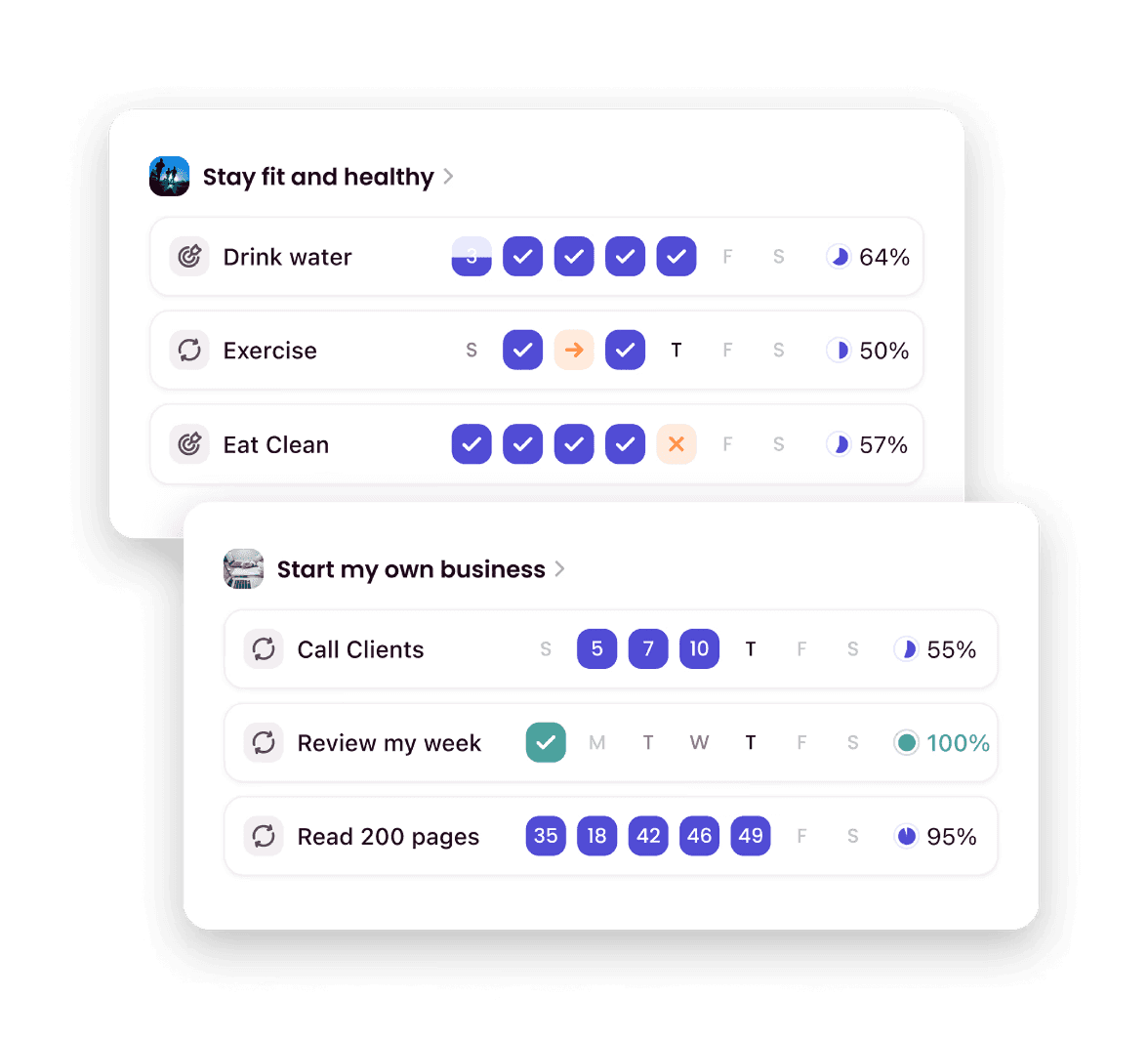
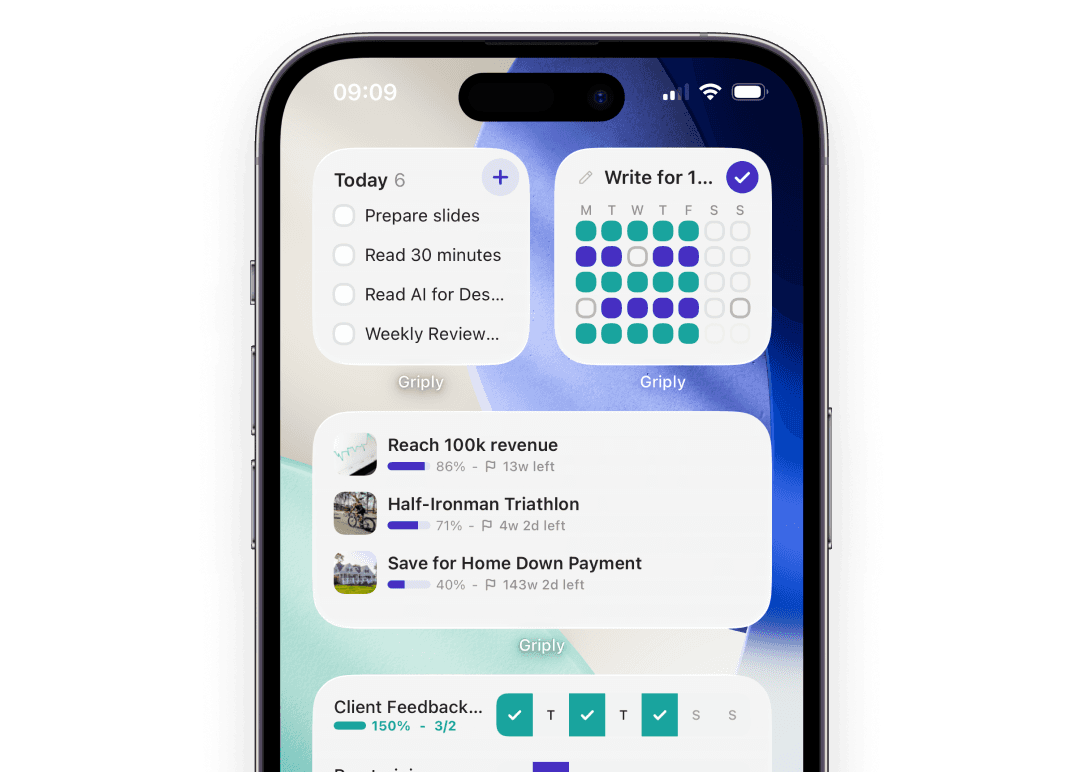
Strides tracks your metrics, but your tasks live in a separate app. Griply keeps goals, habits, and tasks together, so every action traces back to something that matters.
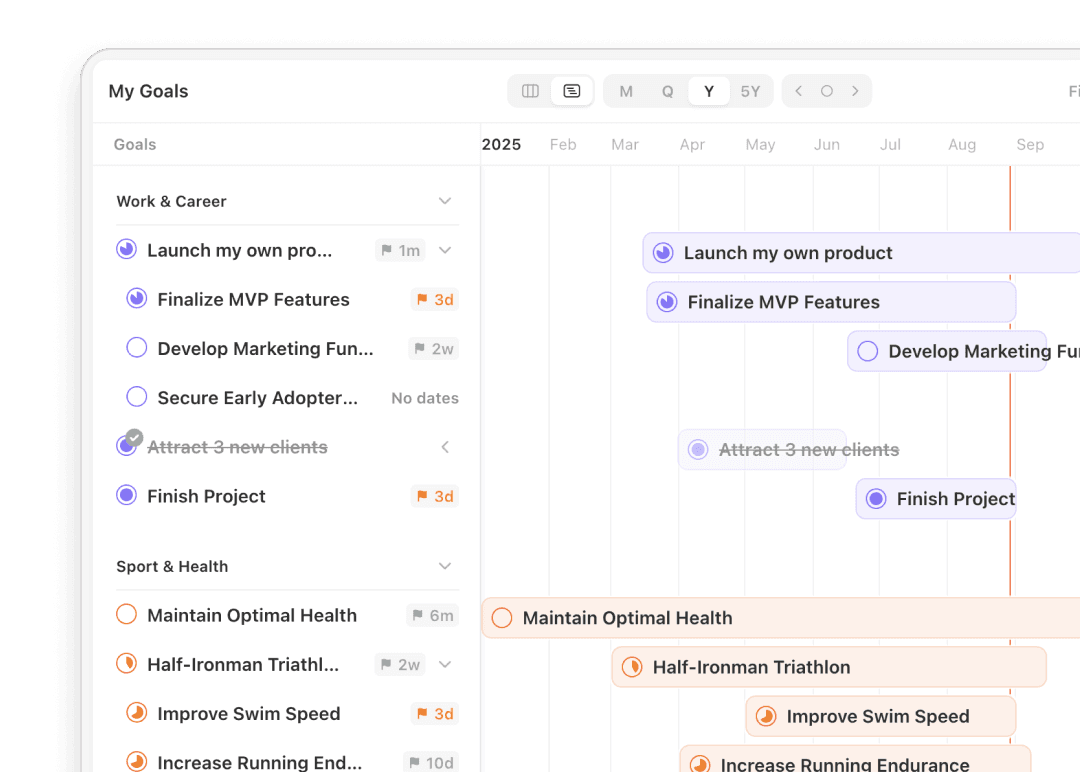
Your multi-month strategy visible at a glance
Strides tells you if you're on pace today. Griply's Goal Roadmap lays your goals out on a Gantt timeline, so you see your whole strategy at once.
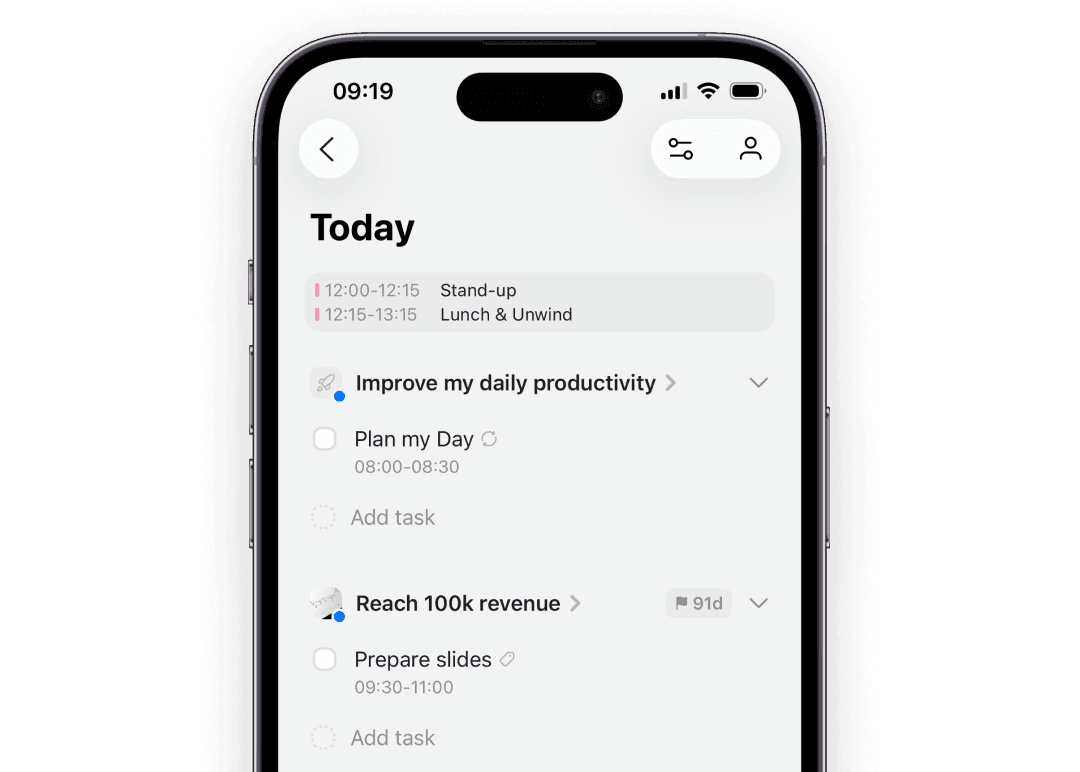
Plan on your Mac, Windows, or phone
Strides runs only on Apple devices. Griply works on iOS, Android, web, Mac, and Windows, so your planning system travels with you wherever you work.
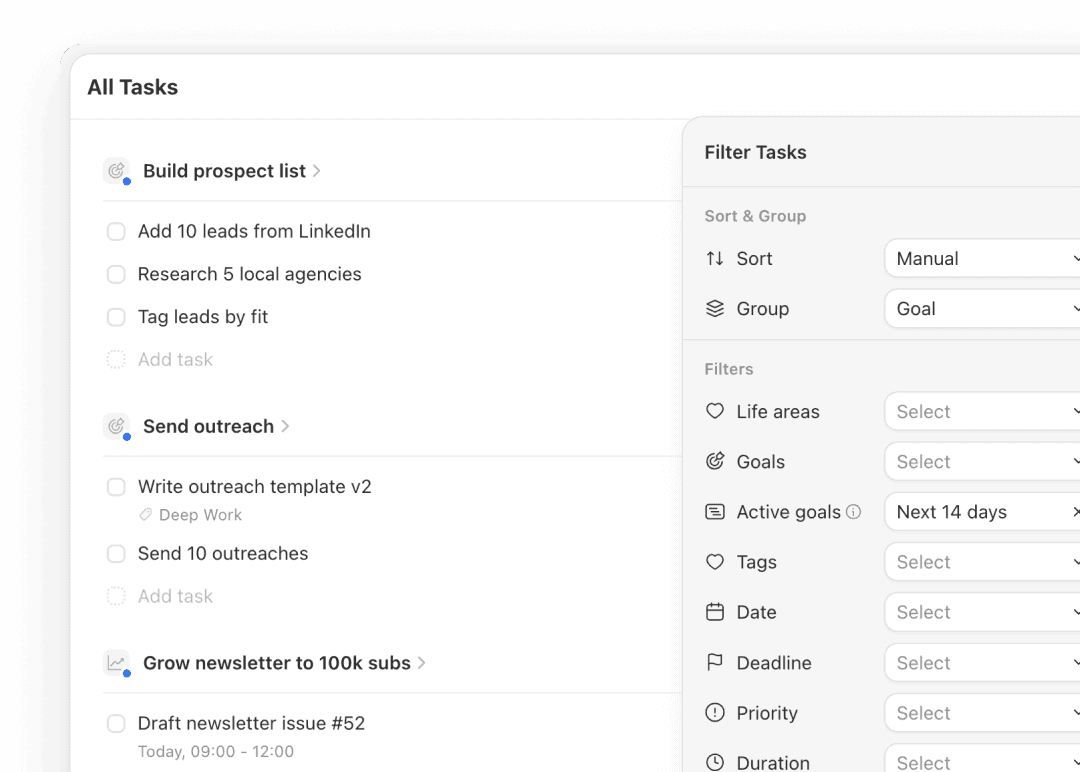
Habits with a reason behind each one
In Griply, habits can connects to a goal, so each check-in means something bigger. Strides treats habits as standalone metrics with streaks and success rates.
Can Griply replace Strides?
Yes. Griply covers what most people use Strides for, including numerical goal targets for weight, distance, time, or money, and it adds a full planning system with tasks, a Today view, and a goal roadmap that Strides has no equivalent for. The one thing Strides does that Griply doesn't replicate is continuous average tracking, like keeping a daily calorie or weight average. For that specific case it keeps an edge, but for habit and goal tracking with real planning attached, Griply replaces it outright.
What is the Strides app?
Strides is a habit and goal tracker for Apple devices. It is built for people who want data-driven metrics on their personal progress, using a pace-line dashboard that shows whether each habit, target, or milestone is on track for the day.
Is Strides free to use?
Strides has a free tier that tracks up to three habits or goals. The paid tier, Strides Plus, costs $4.99 per month or $39.99 per year and adds unlimited trackers, cross-device sync, and advanced reports. Griply also has a free plan (2 goals, 2 habits) and a Premium tier at $49.99 per year, with task management and goal hierarchy included.
What is a good Strides alternative for goal tracking?
Griply is a strong option if you want to connect your habits and goals to actual tasks and projects. Strides is a metrics dashboard. Griply is a planning system: you set a life vision, build goals under it, and add the habits and tasks required to reach them. If your main need is numerical tracking with rolling averages and pace lines, Strides is still the better tool for that.
Does Griply connect habits to goals?
Yes. Every habit in Griply is part of the goal hierarchy: it connects to a goal, which connects to a life area and a personal vision. You can also attach a habit to a life area without a specific goal if you prefer a looser connection. Either way, the daily check-in is always purposeful.
How does Griply compare to Strides for daily planning?
Strides shows a dashboard of progress bars, pace lines, and success rates for your habits and targets. Griply shows a Today view that surfaces your tasks, habits, and calendar events for the day, all linked back to the goals behind them. Griply is a planning tool you work from; Strides is a tracking tool you report into.
Is Strides worth it for personal goal tracking?
Strides is well-built for precise, data-driven habit and goal tracking. Its pace-line dashboard gives users a level of numerical detail most habit apps cannot match. If you want rolling averages, cumulative targets, or milestone tracking with detailed analytics, Strides delivers. If you also want to plan and execute on goals with a full task manager and a long-term roadmap, Griply is the better fit.

Griply
Ready to go from tracking to achieving?
You have two paths. Keep tracking your habits in Strides while your tasks and projects live in a separate tool. Or move to Griply, where goals, habits, and tasks live in one system, and every piece of work points back to what you are building toward.
Still deciding? Join our Community and ask the founders why they built Griply. We’re there every day.